Photo Day: Avignon

These photos are from a trip we took while spending summer in the south of France a few years ago. “South of France” – even the words themselves  evoke beauty and romance, n’est-ce pas ?

Le Palais des Papes - The Popes' Palace, temporary home of the Popes during the 14th century

Le Palais des Papes – The Popes’ Palace, temporary home of the Popes during the 14th century

Hotel de Ville, Avignon

Hotel de Ville, Avignon

My hubby, at the Grand Escalier D'honneur in the Palace

My hubby, at the Grand Escalier D’honneur in the Palace

Gothic Arches in the Palace

Gothic Arches in the Palace

My kind of gift shop!

My kind of gift shop!

The Palace from the Pont d'Avignon

The Palace from the Pont d’Avignon

Sur le pont d’Avignon

On y danse

On y danse

Sur le pont d’Avignon

On y danse tous en rond

This is a charming children’s song that I happily sang for the rest of the day.

Pont d'Avignon

Pont d’Avignon

View of Avignon from across the Rhône

View of Avignon from across the Rhône

A man tends to flowers on his balcony in Avignon

A man tends to flowers on his balcony in Avignon

Me at the Waterwheel in Avignon

Me at the Waterwheel in Avignon

Advertisements for the upcoming theater festival

Advertisements for the upcoming theater festival

Pas Mal

We visited a French friend’s home recently for the first time, and when I walked into their La Jolla area abode, complete with floor to ceiling windows and a spectacular view, I exclaimed: “This is such a fabulous house! Wow!”

My friend answered, with an indifferent shrug, “C’est pas mal.”

I stared at him. “That’s such a French answer.”

“Oui. There are some that are better, some that are worse, so: pas mal.”

And there you have it: French culture and American, juxtaposed. We Americans tend to be enthusiastic, perhaps overly so, of even the most mundane of things. “Oh my god, there is nothing better than potato chips. These ROCK.” Everything is awesome, amazing, choose your superlative. The French, on the other hand, can’t seem to muster up excitement about anything.

There’s little difference, for example, in how they describe something that’s great versus how they describe something that sucks: “C’est pas mal.” It’s not bad. This describes anything from something good to something fabulous. Then there’s: “C’est pas terrible.” Literally: It’s not terrible. This describes something awful.

As an aside, the word “terrible” in French is almost always used in the negative, except when it’s not, like here: C’est un truc terrible. Translation: It’s awesome.

Then there’s the typical response to someone proposing a great idea. Here, we’ll say, “What an amazing idea!” or something equivalent. The French will more typically say, “C’est pas bête,” Translation: That’s not stupid.

It’s easy to assume from all of this that Americans are shallow, fake, insincere, and that the French are a bunch of negative duds. No wonder we have so much trouble understanding each other!

Our interpretations of others are colored by our own biases, opinions, experiences, and of course, our cultural understandings. It is easy to generalize something, as I have above, that in truth is much more complicated and nuanced.

It’s also true that my friend’s house is really freaking awesome.


Bastille Day/ La Fête Nationale

Arc de Triomphe on Bastille Day

Arc de Triomphe on Bastille Day

July 14, Le Quatorze Julliet, marks the French holiday we know as Bastille Day. Not surprisingly, the origins of this holiday are un peu compliqué. Two key events in the French Revolution share this date.

The first: In 1789, the people of Paris, fearful that their representatives would be attacked by the royal military of Louis XVI and desiring ammunition and gunpowder for a possible battle, stormed the Bastille, a prison in Paris that held citizens under not so just cause and without rights to appeal. Often, prisoners were held there because of anti-royal writings.

One year later, on July 14, 1790, there was a huge feast to celebrate the conclusion, or so they thought at the time, of the French Revolution. Apparently the feast lasted 4 days and concluded with fireworks, fine wine, and running naked through the streets.

Pétanque in Provence

Pétanque in Provence

While we didn’t run naked anywhere, we did celebrate the holiday. We kicked it off with a pétanque tournament; I was partnered with a lovely Englishwoman named June and while we held our own, we were eliminated early in the tournament. It’s quite possible that my problem was I didn’t have a cool straw hat like most of the experienced players. No big deal, I was hungry and I forgot how long those games last! The French-American Chamber of Commerce sponsored a barbeque, concert, and pick-up soccer and volleyball games, so we had plenty of time to eat and play with San Diego’s French and Francophile community. It was a perfect southern California day: sunny, a cool ocean breeze, bright blue skies.

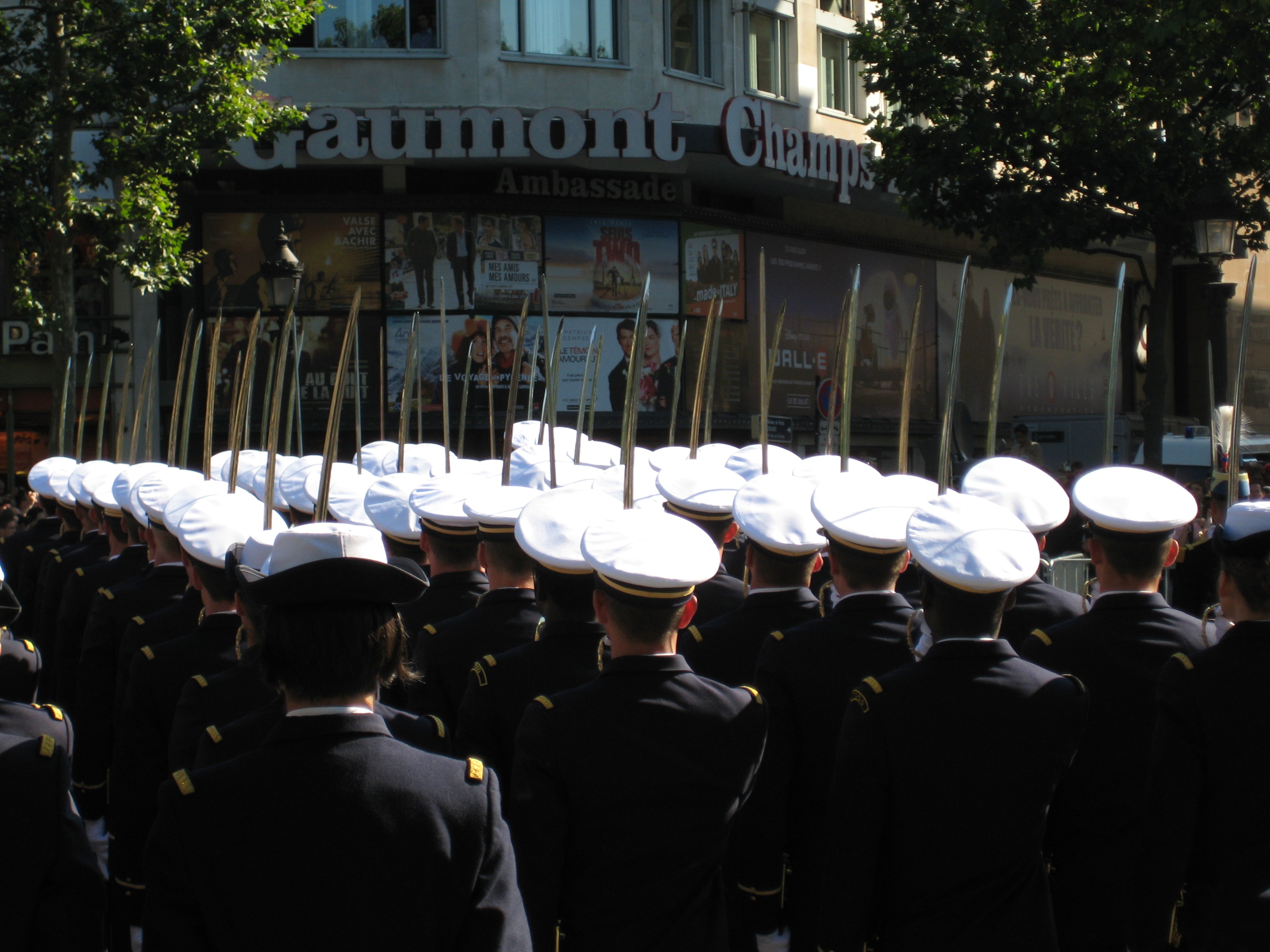
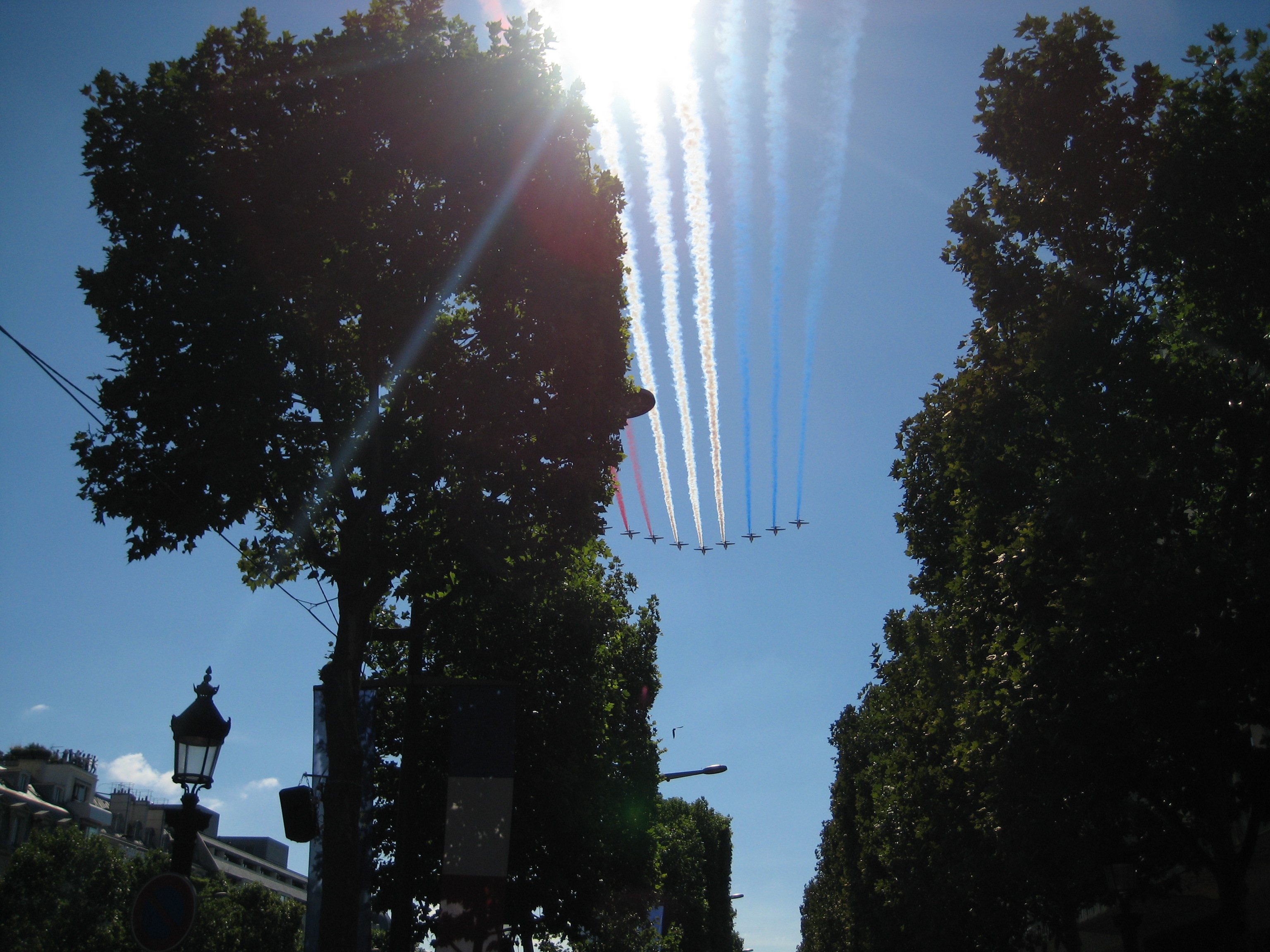
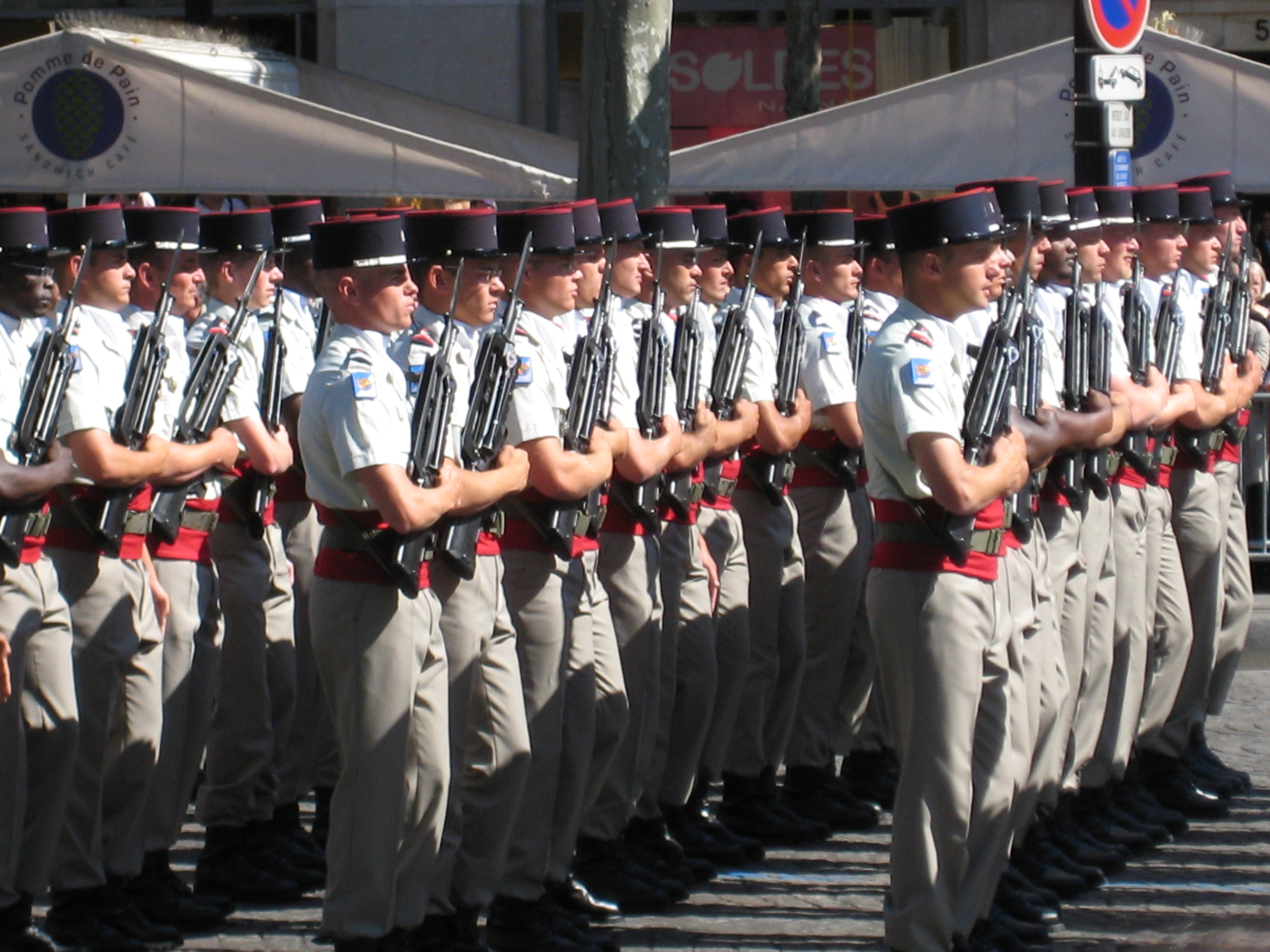
Here are some photos from the Bastille Day Military Parade a few years ago. It proceeds down the Champs Elysees and lasts for hours. The year we were there, Sarkozy was president. As he rode through, the crowd around us started whistling and my first thought was: they really like their president. Then I realized my mother-in-law was shaking her head and shocked, astonished, that people would dare whistle like that. Turns out whistling in France is quite rude; basically the equivalent of booing. So probably best not to whistle at a French girl.

If you ever go to the parade, get there early, bring lots of water, a snack, definitely a camera, and don’t bother to try and claim any territory like you would in a parade here – you’ll be scrunched and pushed out of the way.

Here’s my Bastille Day workout, designed to help you stand your ground in the crowd of parade revelers:

1. Medicine Ball Squats: Take a wide stance and squat down, maintaining even weight on each foot, while thrusting the medicine ball straight out in front of you, arms parallel to the ground. This will help you keep your position and should you need to, shove back.

2. Lateral Deltoid Raises While Balancing on One Foot: To help you ward off those pushers that come at you from the side while maintaining your balance. You can’t risk falling at the parade, they’ll never let you stand back up.

3. Lunges with Biceps Curls: It’s hot. Really freaking hot in Paris in July. If you are American, and as such a Water Bottle Addict, you’ll be lifting that water bottle to your mouth for at least three hours straight. The lunges are to help propel yourself forward with force after you’ve been shoved and maneuvered to the back of the pack.

Me, waiting for the parade to start

Me, tired from getting up early, waiting for the parade. We started out in front then got shoved to the back before the parade even began.

594 Bastille Day 597 Bastille Day

Best seats on the Champs

Best seats on the Champs. They were drinking champagne.

608 Bastille Day 610 Bastille Day 634 Bastille Day

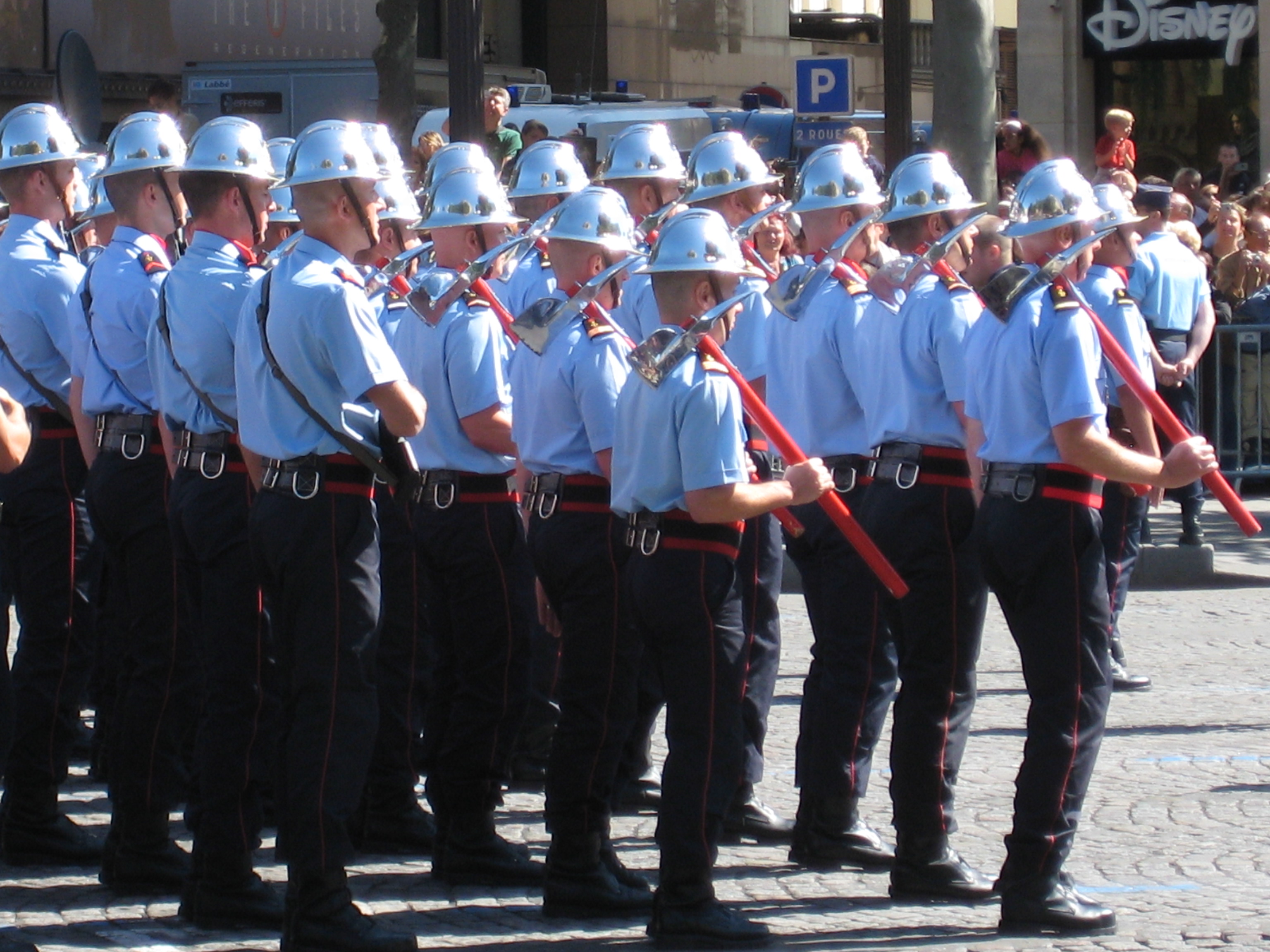
The firemen, the most popular group in the parade

The firemen, the most popular group in the parade

651 Bastille Day

642 Bastille Day 656 Bastille Day

664 Bastille Day652 Bastille Day

Kermesse

School’s out for summer!

kermesseSummer feels more real with kids. In San Diego, where the seasons blend and where we have two, maybe three weeks of vacation a year, summer never really meant much. Just a little warmer and crowds of tourists everywhere we want to go. But now, my daughter has finished her first year of preschool, and we kicked off summer in style: with an end of year show and Kermesse.

The preschool section of the school put on an hour-long show. Somehow, the teachers got those two, three, four, and five-year-olds to perform choreographed dances, sing, recite memorized lines, and even put on a play. Seriously – three and four year olds doing the tango, kindergartners performing Snow White, and two-year-olds dancing to a beat, each group waiting patiently while the others performed, and not one of them on stage crying for Maman? Amazing. These people are miracle workers.

Four year olds doing a choreographed dance on boogie boards to Surfin' USA

Four year olds doing a choreographed dance on boogie boards to Surfin’ USA

Two-year-old cowboys and cowgirls

Two-year-old cowboys and cowgirls


Then there was Kermesse, a carnival of sorts that in France is mainly put on my parochial schools. When my husband heard there would be a Kermesse at the French American School, he immediately decided to take a half-day off, citing fond memories of going to Kermesse with friends as a child. The school did not disappoint: lots of fantastic food, a few rides, good music, and all sorts of fun activities.

Yes, please!

Yes, please!

DSC00507

DSC00498

Homemade games with prizes

Homemade games with prizes

Dunk Tank

Dunk Tank

DSC00508

DSC00523

Happy summer, everyone!

French Children’s Books

 A friend of mine sent me this link to an article published in the Guardian on Terrifying French Children’s Books.

I’m torn in choosing a favorite among La Visite de petite mort (Death visits a little girl. He kills her), Le Voleur de Lily (The Thief of Lily – Lily is kidnapped), or Le Jour où Papa a tué sa vielle tante (The Day Daddy killed His Old Aunt – true crime for 7-year-olds).

French children’s books, like French movies, aren’t big on the whole “and they lived happily ever after forever and nothing bad ever happened again and everyone was delighted for always” endings. Moral messages don’t seem to be present in many books, either.

We are amassing a collection of French children’s books in our home. There’s one collection of pop up books that particularly caught my eye for their great art and classic stories, so I ordered several of them from Amazon.fr. Then I read them. Starting with Le petit poucet. Petit Poucet (Little Thumb) is the youngest of seven children. His parents run out of food and decide to abandon their children in the forest. Petit Poucet leads his siblings back to their home, so their parents take them out and abandon them, again. Successfully, this time. The children are captured by ogres who plan to make a fine meal of them, but Petit Poucet tricks the ogre into eating his own children instead. Woo hoo! Happy ending!

That book is no longer in our house. I can just hear my daughter every time we go hiking: “Mommy! (sob, sob) Are you going to leave us here so the ogres can eat us?”

There’s the classic: Alouette, gentille alouette. How many people actually know what the words are, other than the chorus? It’s about plucking all the feathers from the bird, then dismembering it. Slowly. While singing an upbeat tune. But the pictures are so pretty:

DSC00415

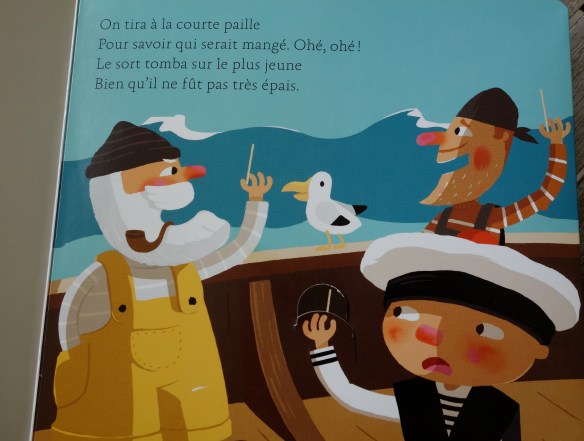
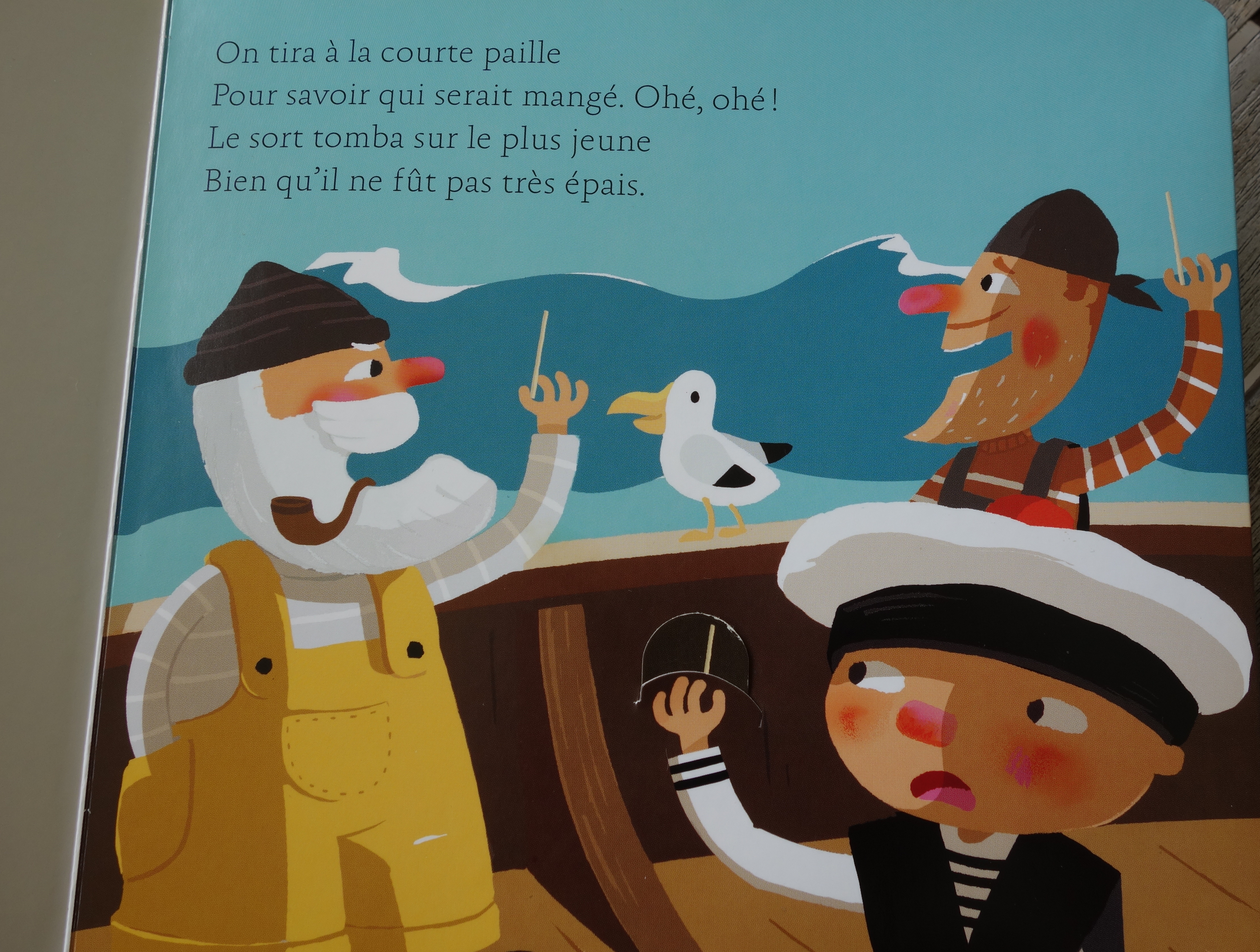
Il était un petit navire: There was a little boat. The sailors run out of food and draw straws to decide which crew member will be dinner.
DSC00416

A little boy draws the short straw and as the men discuss how to cook him and what sauce to use, he prays to the Virgin Mary to save him.

We're coming for you, little boy, with our sharp shiny knives!

We’re coming for you, little boy, with our sharp shiny knives!

DSC00418

Happy ending! She does. In our version, anyway. Not so much in the traditional tale.

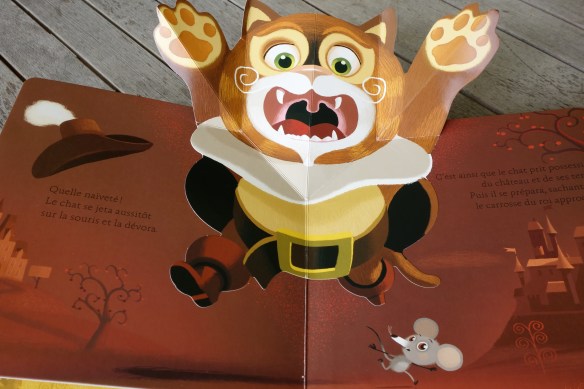
This pop up picture causes my poor son to burst into tears, every time. Le chat botté (Puss in Boots) is pretty freaky here:
 DSC00421


Granted, plenty of our nursery rhymes, songs, (Ring Around the Rosie, anyone?) and old fairy tales aren’t exactly geared for the modern child. But so many have been Disneyfied that we’ve become accustomed to happy endings, justice being served, and a palatable moral message. Though I still have huge issues with the Little Mermaid. She gives up her home, family, fins, and voice for a man? Ugh. Yes, honey, but the prince is so handsome!

Many of our most familiar fairy tales were first penned by Charles Perrault, a Frenchman who lived and wrote in the 17th century and who is known as the initiator of the literary fairy tale. Cinderella, Puss in Boots, Sleeping Beauty, Little Red Riding Hood, Blue Beard, and my favorite: Le Petit Poucet… all come from Perrault. He called his collection: Tales of Mother Goose. Château de Breteuil, just outside of Paris, has plays and displays all featuring the tales of Charles Perrault, plus beautiful gardens to wander through.

Beauty and the Beast, or La Belle et La Bête, was written by frenchwoman Jeanne Marie LePrince de Beaumont (the version as we best know it).

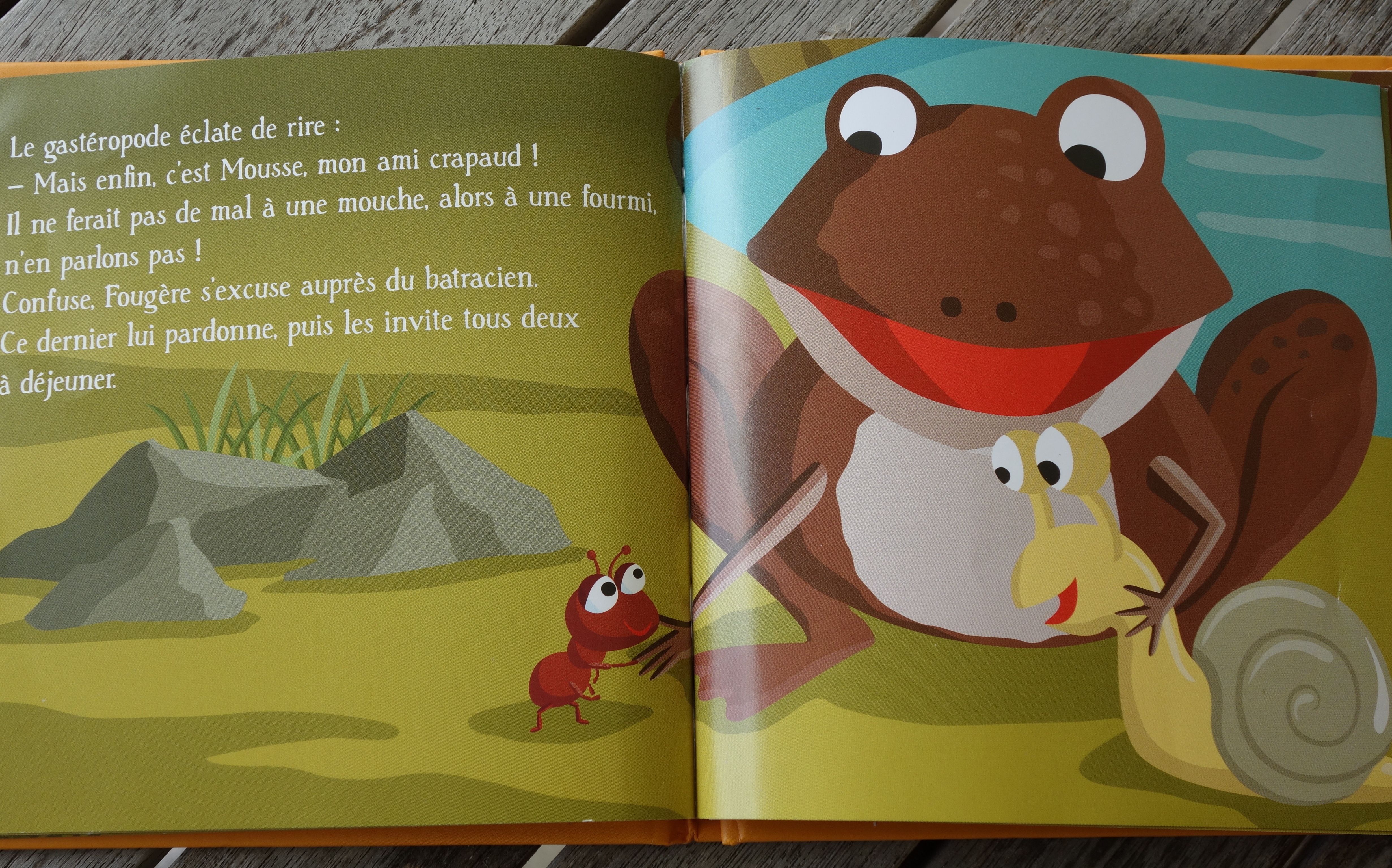
We have found several books that we enjoy. I love this little book, especially the illustrations, that I found on our last visit to France: La Fourmi voyageuse: The adventurous ant. It’s about a hardworking ant who is persuaded by a snail to leave his work and explore the world – “there’s hundreds of you working. No one will notice if you are absent for a moment!” The ant decides to ditch work and explore and he has a wonderful adventure and makes new friends:

DSC00424

When he returns home, he tells the other ants of his adventures. The queen decides to give each ant some free time so they can all explore the forest, too. Hmmm. Sewing the seeds of, oh dear, dare I say the icky word, socialism? Pretty soon those ants will be expecting eight weeks vacation and free health care.

DSC00425

The Petit ours brun series and T’choupi, both of which are also cartoons that are easily found on You Tube, are favorites.

DSC00422

DSC00423

Babar is also one of my daughter’s favorites, though Babar’s mother is killed by a hunter (much like Bambi). We skip over that part for now.

DSC00431

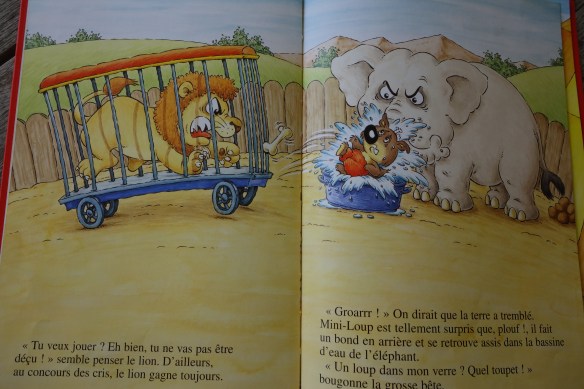
Misbehaving Mini-Loup (little wolf) is always wreaking havoc:

DSC00426

But he usually pays for it:

DSC00427

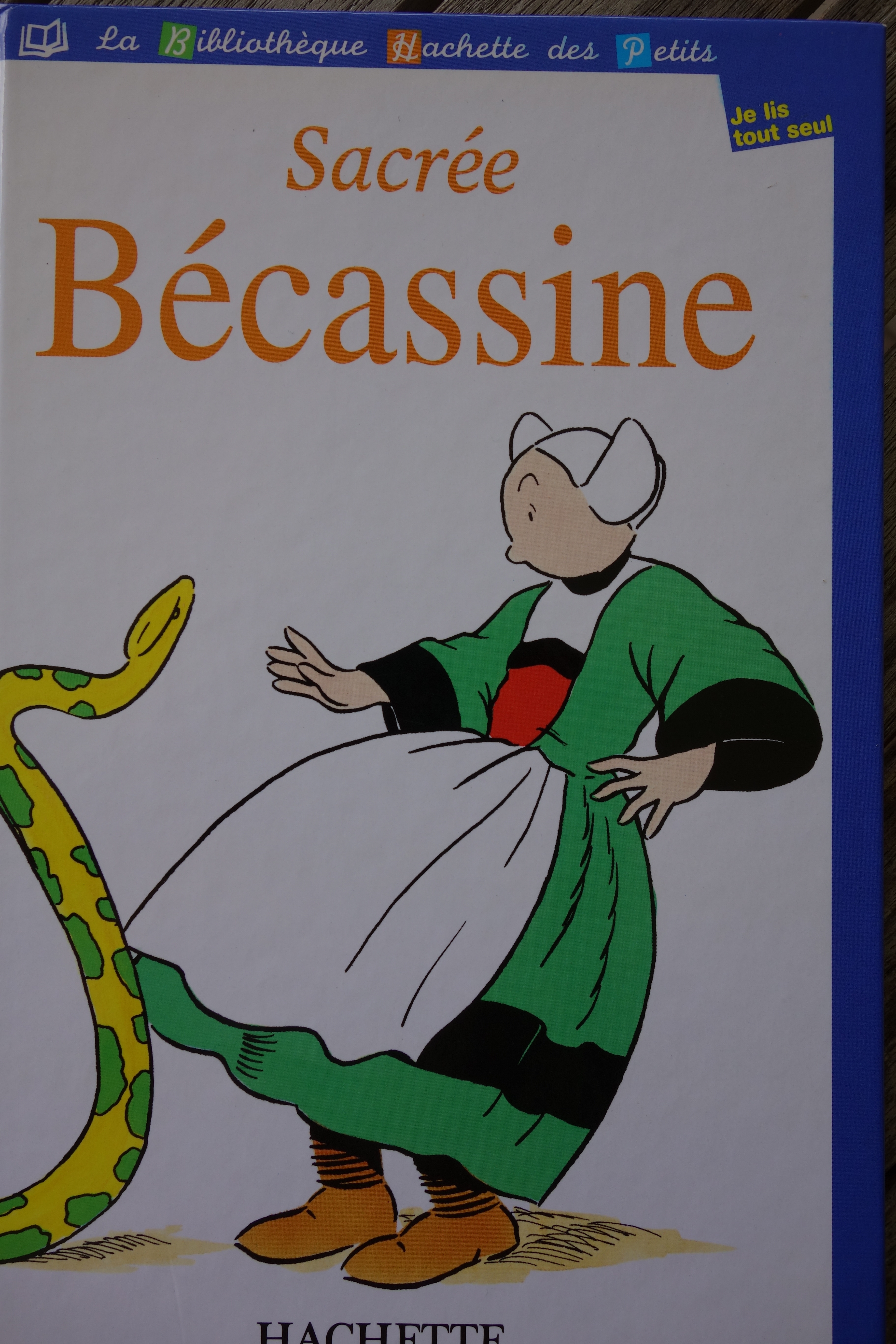
Then there’s Bécassine, the French version of one of my English favorites growing up: Amelia Bedelia:

DSC00428

I look forward to visiting bookstores next time we’re in France. Any suggestions out there for children’s books we should read?
The Rose Colored Glasses Wiped Clean

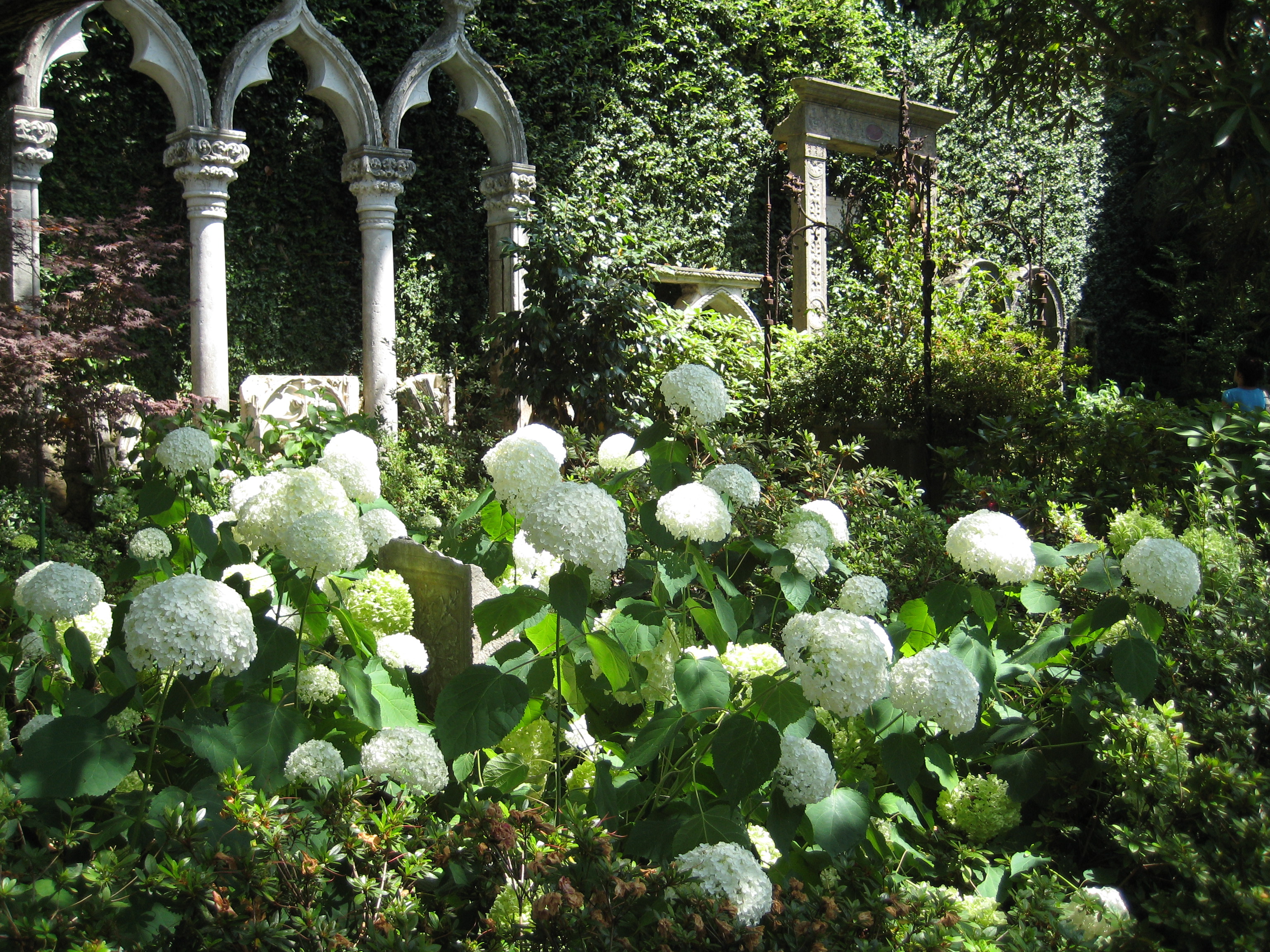
 342 Stone garden

I wrote this five years ago after spending most of the summer in Antibes, France. That was the summer France lost some of its magic for me, but that isn’t a bad thing. It became a real place – one with flaws as well as astounding beauty – rather than the idealized fantasyland of my European dreams (which wasn’t such a bad thing either). France still holds magic for me, and when I gaze upon her lavender fields, explore her old castles, or walk her cobblestone streets, I live some of my happiest moments.

I’m back in San Diego after our summer stint in the south of France. I’ve spent a lot of time in France and have devoted much time and effort to mastering the unmasterable French language. This recent trip was a test for us.  Exam question: Do we want to move to France? Answer: The jury is still out.
France, for me, particularly the south, has long been an idyllic escape, a locale I long for when I’m away. After all the time I’ve spent there, I still idealize the place, even if it means subconsciously denying its imperfections.

There is such joy, and magic, in being in a foreign country – new sights, smells, sounds. But part of that comes from not knowing what exists in its dirty underbelly. In seeing only the glamorous parts meant for the tourist’s amazed eyes, and not having to deal with the day to day aspects of living there. Part of that magic also comes from not knowing what is being said around you.

One afternoon, after hitting the beach, I was absolutely overheated. On my walk home past the chic private beaches and touristy shops that spilled their postcards, film (people still buy film?), beach towels, and bikinis onto the sidewalk, I didn’t pass one of the many ice cream shops. Instead, I stopped for some of that devine delicacy, a gob of gastronomic goodness, a jolt of gelato, yes – bliss on a baked waffle cone.

As I walked away with my temporary treasure, it of course began to melt, so I stopped in front of a shop window to eat some of it and ensure that I didn’t arrive home covered in telling chocolate drips. An older man, short and stocky with a genial smile, walked by and said something to me. It took a minute to process what he had said, so enraptured was I in waffle cone wonderland. So, for a brief moment, I existed in that blissfully unaware state that always occurs when I’m traveling in a country where I don’t speak the language. I saw a sweet little old local, probably flirting with me judging by the way he was smiling, or perhaps recommending a pair of shoes from the window I was absently eyeing. He stopped to watch me, and then my brain finally processed what he’d said:

“You’ll get fat if you keep eating like that.”

Jackass. I liked you better when I had no clue what you were saying.

Snappy comebacks aren’t my forté – though they come to me later in numbers. When offended, I revert to a wordless, helpless little girl.

But perhaps my actions in that moment spoke louder than words. I shrugged and took another big lick. Did that translate, monsieur?

Villa Rothschild on  St. Jean Cap Ferrat, magic and beauty in the south of France

Villa Rothschild, St. Jean Cap Ferrat, magic and beauty in the south of France

Fondue and Mousse Au Chocolat

I turn my dinner guests into guinea pigs. My first attempts at a new meal are often when we invite friends over. So far, no one has complained. Fondue is an old stand by, but this was my first attempt at chocolate mousse.

May isn’t the best month for fondue, but it was requested by my friends back in March, then the dinner kept getting pushed down the calendar… did I mention I live in California? This is what we do. Luckily, last week was cold and rainy, so fondue turned out to be the perfect remedy.

DSC00161

DSC00168

Two things broke me out of my Kraft Mac and Cheese habit from college. One – a good girlfriend who was a brilliant cook. I started hanging out at her house, learning what I could. Thank you, Shawna! The second – my husband. On our first “Come on over for dinner” dates, I served him quesadillas and spaghetti with packaged sauce mix. He was gracious and complimentary. So I tried something a little more complicated. He was more complimentary, even excited, and cleaned his plate. So I kept trying. I stopped using packages and started using fresh ingredients. I got bolder, more experimental. Today, my friends know me as a really good cook, and I’m convinced it’s the reason our parties are always so crowded. And to this day, my husband has never once said a bad thing about anything I’ve cooked. At worst, he’s been silent, and when I say something like, “That was horrible, I’m sorry,” he’ll pat my hand and say, “it wasn’t your best effort.” So I keep at it.

The chocolate mousse was a recipe that, six or seven years ago, I would have taken one look at and decided to buy a gallon of ice cream instead. Lots of steps, constant stirring, and temperature dependant… but it came out fantastic.

DSC00172

The Trouble With French…

 … is all those vowel sounds. Oh, and the “r”s. And the faux amis. Maybe I should just quit now.

The thought of quitting enters my head on a daily basis lately. My Phonetics and Oral Proficiency class wrapped up this week. Yesterday I listened to a recording of myself reading Enivrez-Vous by Baudelaire that I made the first week of class, and I cringed and squirmed in embarrassment. I know I’ve improved since then. The vowels that were once a mystery to me are now decipherable. The rolling “r” has improved, slightly. But rue and roue still elude me (read here about my experiences with these petit mots). Every time I say one of these words and my husband smiles and says, “You’re so cute,” I want to throw my textbook across the room and shout, “I quit!”

I have to remind myself how far I’ve come, and that progress is now measured as fine-tuning rather than huge leaps. My comprehension and pronunciation is much better than it was four months ago. Let alone when I first met my husband. We occasionally spoke French together on our first dates, and on one of these I was explaining to him that my neck, mon cou, really bothered me sometimes, but when I rested it or got a massage, it felt much better. Cou, phonetically, is [ku]. Not far from [ky], or cul, which means ass. I often confused the two. So as I spoke, he nodded and fought a smile, then laughed and told me he hoped massage and rest would help my aching ass.

More recently, when our daughter sang her French song about a hen sitting on a wall, as she got to this part: lève la queue et puis s’en va, I nearly choked on my water à la Jon Stewart style. Queue, the word for tail, is again close to cul to the untrained ear. I asked her to repeat what she’d said, and then realized that she wasn’t, after all, singing about a hen who sat on a wall and then decided to pick up her ass and leave.

I’ve spent a lot of time practicing vowel sounds. I think I’m finally distinguishing well between deux and douze (two and twelve), and I might even be able to order un croissant without waving one finger in the air (or a thumb, as one finger also confuses the French) to make it clear how many I’m asking for.

My face hurts after I speak French. There’s a lot more movement and tension in the jaw and cheeks in French than in English. You can tell a French person from a distance by the way their mouth moves when they speak and the tension in their facial muscles. English vowels are kind of lazy, really. We warp them to make it less of an effort for ourselves. Don’t believe me? Try the words “can” and “than” on their own and then in a sentence or two, and see what happens to those poor little “a”s. Our professor jokes that we must exercise our mouths to tone up our speaking muscles for French just as we would exercise our bodies for a sporting event, but it’s true. It’s a completely different way of using our face and tongue and vocal cords.

As my vocabulary improves, my confusion over faux amis lessens. When we got married eight (!) years ago, we wrote our own vows in both French and English. I, not wanting to humiliate myself in front of his family, read them to him before hand to make sure I hadn’t made any huge errors.

Thank God for that.

As I explained that I was so happy to be starting our lives together and excited for our future and that I hoped I could make him as happy as he’d made me (these sappy words were the only ones I could manage with my rudimentary French), he nodded and gave me a wolfish smirk while wiggling his eyebrows.

“I hope so, too,” he said.

“What? What did I say?”

This is how I found out that in French, the word excité is only used in a sexual sense. Turns out I was about to announce, in front of all of our friends and family, that I was horny and hoped I could satisfy him.

When I remember these things, and how far I’ve come, the thought of quitting seems preposterous. A friend recently pointed out to me that I’m an overachiever and I should cut myself some slack. The thing is, too much slack and I get antsy and bored. So I might as well keep on with this French stuff.

DSC00253

Les Vacances

Dreaming of this today:

Image

I am in desperate need of a vacation. For the first time in a very long time, we have none planned. Boo.

How about you, my readers and blog buddies? Anyone have lovely travel plans you’d like to share?

The Results Are In: My French Ain’t Half Bad!

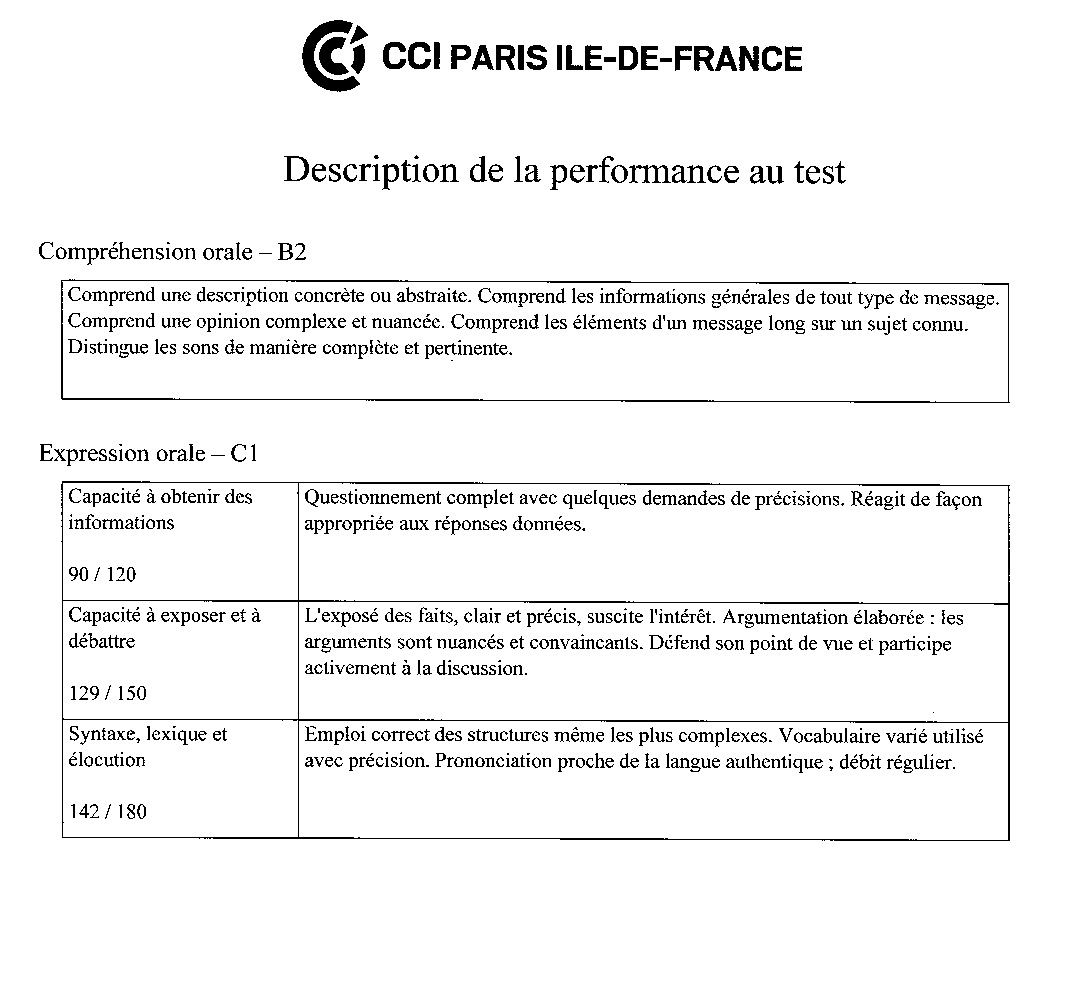
Turns out my French is better than I give myself credit for, at least according to the Alliance Française and the test I took there!

The exam was two sections: the first on computer, which started with very basic French and quickly progressed to complicated phrases and vocabulary. In one of the sections I had to answer questions on women’s hairstyles depicted in basic drawings. I wouldn’t know what those styles were called in English, so I’m pretty sure I bombed the French part! Points were awarded for correct answers and removed for incorrect answers. Intimidating.

For the second section of the test, I spoke with two native speakers. In our first conversation, I had to pretend to be interested in buying a home in the southwest of France. Not so hard to pretend I wanted that house! In the second conversation, I had to convince one of them to give up using her cell phone for 24 hours.

Here are my results:


French Placement Test

Here’s how those levels are defined, according to the Wiki article on the CEFR (Common European Framework) for determining language levels:

B2 is Upper Intermediate:

·Can understand the main ideas of complex text on both concrete and abstract topics, including technical discussions in his/her field of specialisation.

·Can interact with a degree of fluency and spontaneity that makes regular interaction with native speakers quite possible without strain for either party.

·Can produce clear, detailed text on a wide range of subjects and explain a viewpoint on a topical issue giving the advantages and disadvantages of

various options.

C1 is Effective Operational Proficiency, or Advanced:

·Can understand a wide range of demanding, longer texts, and recognise implicit meaning.

·Can express ideas fluently and spontaneously without much obvious searching for expressions.

·Can use language flexibly and effectively for social, academic and professional purposes.

·Can produce clear, well-structured, detailed text on complex subjects, showing controlled use of organisational patterns, connectors and cohesive        devices.

 While these results mean we can move forward with my nationality application, they also mean that I need to be less self-conscious in speaking French. I’m at a level where I’ve passed those first few huge hurdles of the learning curve, but I am very aware of the many things I haven’t yet mastered, so too often I tend to not speak rather than risk making mistakes. I want to be completely bilingual. To watch a movie without any need of subtitles. To understand song lyrics without help. To not make grammatical errors. To maybe, even, someday teach French. (I need a back up plan. Being a physical therapist is hard on your body!)

These results were just the encouragement I needed, as I’ve been doubting whether French is something I can ever hope to master. This reenergized me, and made me start dreaming again of spending a summer, or two, or three, in France, going to language classes, and of one day being so fluent that maybe I even fool a French person or two.