How to Piss Off a French Person

A friend sent me this link to an article on How To Piss Off a French Person, written for Matador Network by Morgane Croissant (com’on, does a name get more French than that?).

Aside from claiming that the French language is “insignificant” (See my previous post), Croissant gives us some fabulous ways to piss off French people, should you decide to make this a goal.

The point she makes about the healthcare system and other benefits was an interesting one. From my American perspective, the French do have it rather easy with their 5 to 8 weeks of vacation, nearly free higher education, and free health care. Yet many continue to complain – as the French are prone to do. (Sorry if I just pissed you off, my dear French readers!) Croissant points out that – yes, the French have these benefits, because they have worked hard, stood up for what they believe to be their rights, and even fought revolutions in order to ensure the lifestyle they now lead. Excellent point, I concede.

I had to laugh, too at the idea that our butchering of the French language is like fingernails on chalkboard to the French, and they’d rather not have to hear it. Did anyone see the movie The Monuments Men? I loved how French character after French character made a disgusted face when Matt Damon’s character tried to speak French, and how they all told him, in their thick French accents, that his French was terrible. Over the last nearly two decades of traveling in France, I’ve noticed the French, even the Parisians, easing up on us poor foreigners as we attempt to speak in French. I’m sure it is in part that my French has vastly improved, but I also think the French are starting to cut us some slack. Still, I’ve had more than one stubborn conversation with a French person where I say something in French, they respond in English, I continue to speak in French, they continue to speak in English, and so on. I want to use my French, perhaps they want to practice their English. I often feel my French is better than their English, perhaps they feel their English is better than my French. Either way, pretty sure we were both pissed off. Good times.

Stay tuned for my next post, where I will give you valuable tips on how to not piss off the French, and perhaps enjoy your next vacation to France un peu plus!

What is Assimilation, Anyway?

I often meet people, my age or older, whose parents immigrated to the U.S. and intentionally avoided teaching their offspring their native language, believing that it would both inhibit their child’s ability to learn English and interfere with their assimilation into American culture. Every one of these now grown “children” expresses regret that they didn’t learn their family’s native tongue.

How times have changed. We now understand that, especially for young children, learning two or more languages is not only possible, but developmentally advantageous. Immigration laws have changed. Our world, too, is smaller. Once upon a time, people boarded a ship knowing they would never see their home country again. They were forced to cut all ties and make a home in the place they landed. Now, we are a Facebook or FaceTime exchange away; we can hop on a plane and be almost anywhere in the world in less than 24 hours, and we can easily find others like us wherever we are: just Google a meet-up group for whatever suits you.

We don’t have a standard definition for what “First” or “Second-generation American” means. Is the first generation the one that did the immigrating? Or the first generation born in the U.S.? As for the term “assimilation,” multiple studies aim to determine how immigrants are assimilating but struggle over how to define what assimilation actually means. Do we measure it by learning English (or the native language of whatever country is being examined)? By civic participation – becoming a citizen, becoming involved in some way? By cultural participation? Did your kids dress up for Halloween? Did you stuff yourself with turkey and mashed potatoes on Thanksgiving, then cheer on your football team while indulging in pumpkin pie smothered in whip cream from a can? Some studies look at economic achievement: jobs, home ownership. Others attempt to examine patriotism. Even more difficult to define: do immigrants feel American? And what does that mean, when even the idea of the “typical” American can vary so much, depending upon what region of the U.S. we are considering? What exactly is the essence of Americanism? Or being French?

Most bicultural or non-American families I know raising children today diligently work to make sure their children know their native cultures and native languages. They fear their children will grow up unable to communicate with family back home, or unfamiliar with what to our friends is so familiar. They embrace many of the traditions and culture of their chosen American home, yet they actively retain their own cultures as well. For us, in our French-American home, the blend is mostly easy. We both already celebrated Easter and Christmas. For my husband, Halloween and Thanksgiving are fun new holidays (though no self-respecting Frenchman would ever stuff himself silly. As for American football… he’s making valiant efforts at appreciating the sport). I had no issue with long meals full of visiting and drinking wine more often. We were both happy to have an extra holiday in July for fireworks and barbeques. Sometimes I think we should move to France just so we can enjoy May, where public holidays mean a month of, well, joie de vivre, and August, where the whole country goes South for vacation.

The challenge for most of us remains teaching our children the second, non-English language. In San Diego, multicultural families surrounded us. One time at the playground, I counted seven different languages being spoken. Seven. We were the norm there – multilingual, multicultural. Here, in Colorado, I rarely hear a foreign language. And for the first time, I feel self-conscious when I speak to my kids in French. People stop and stare. I assume it is because it is so, well, foreign here.

We have no doubt our kids will learn English. With our American family, school, me, and peers, they’ll have plenty of exposure. Unlike many of the families from generations past, we desperately want our kids to speak French and to know their French heritage. We hope they are proud of their unique cultural make up. We hope they can feel at home, that they will have a sense of belonging, in the U.S. and in France. It’s the changing face of our world – a multilingual, multicultural, small world. Where we embrace rather than disconnect from our heritage, where we are proud to speak another language, where diversity is a beautiful, colorful thing.


The French Version of Me

Something strange happens whenever I go to France. I morph into a slightly different person.

I’m not pretending to be someone I’m not. I’m not even on my best behavior. No, it’s about the language. I can’t quite be myself in French.

In part, my French is not fluent, so I always feel I’m in a bit of a fog, not completely able to hear, understand, or express myself. But there’s more. My sarcasm and dry humor don’t often translate. I’ve tried, and more often than not I end up getting confused looks or worse, offending people. In French, I tend to be quiet and withdrawn, while in English I am extroverted, confident, sometimes even gregarious. I tend to be much more serious in French; again – my humor doesn’t translate. In English, I tease and joke with everyone and I constantly poke fun at myself. I’m not there yet with my French. Instead, I resort to a goofy, unsophisticated sense of humor that relies heavily on facial expressions and body language, whereas in English I’m known for being so deadpan people can’t always tell if I’m joking.

I phrase things differently. In English, I can be precise with my word choice, allowing myself to be diplomatic or irritated, straightforward or sarcastic, serious or funny. In French, I must rely on my limited vocabulary, gestures, and an exaggerated tone of voice, making me wonder if I come across as dense. It’s so easy to misinterpret what I hear or to say something I didn’t intend to say. Like my wedding vows or the time I announced “Je suis femme !” (“I am woman”) when what I intended to say was: “J’ai faim !” (“I’m hungry.”)

There’s also the inherent cultural aspects of a language. French speakers tend to be more animated, their voices sometimes almost sing-songy. I find myself adopting this mannerism as I speak French. I start doing the French Blow. French speakers tend to repeat short phrases. I say this is because they are always talking over one another, so they have to repeat the same things over and over in the hopes that someone will hear them eventually. In English, I would find this repetition annoying but it seems to be simply  part of the language in French.  I tend to adopt this mannerism as well.

Yet it cuts deeper than the way I express myself, it affects the way I think. Of course, there’s no direct, word for word translation from any one language to another. Getting to the level in a language where you actually think in that language is an exciting milestone to reach. Then, it has become a part of you. Language shapes our minds. So much of a culture is wrapped into its language, and vice versa. When living in a foreign language, our very core changes, sometimes subtley, sometimes more.

Pas Mal

We visited a French friend’s home recently for the first time, and when I walked into their La Jolla area abode, complete with floor to ceiling windows and a spectacular view, I exclaimed: “This is such a fabulous house! Wow!”

My friend answered, with an indifferent shrug, “C’est pas mal.”

I stared at him. “That’s such a French answer.”

“Oui. There are some that are better, some that are worse, so: pas mal.”

And there you have it: French culture and American, juxtaposed. We Americans tend to be enthusiastic, perhaps overly so, of even the most mundane of things. “Oh my god, there is nothing better than potato chips. These ROCK.” Everything is awesome, amazing, choose your superlative. The French, on the other hand, can’t seem to muster up excitement about anything.

There’s little difference, for example, in how they describe something that’s great versus how they describe something that sucks: “C’est pas mal.” It’s not bad. This describes anything from something good to something fabulous. Then there’s: “C’est pas terrible.” Literally: It’s not terrible. This describes something awful.

As an aside, the word “terrible” in French is almost always used in the negative, except when it’s not, like here: C’est un truc terrible. Translation: It’s awesome.

Then there’s the typical response to someone proposing a great idea. Here, we’ll say, “What an amazing idea!” or something equivalent. The French will more typically say, “C’est pas bête,” Translation: That’s not stupid.

It’s easy to assume from all of this that Americans are shallow, fake, insincere, and that the French are a bunch of negative duds. No wonder we have so much trouble understanding each other!

Our interpretations of others are colored by our own biases, opinions, experiences, and of course, our cultural understandings. It is easy to generalize something, as I have above, that in truth is much more complicated and nuanced.

It’s also true that my friend’s house is really freaking awesome.


Kermesse

School’s out for summer!

kermesseSummer feels more real with kids. In San Diego, where the seasons blend and where we have two, maybe three weeks of vacation a year, summer never really meant much. Just a little warmer and crowds of tourists everywhere we want to go. But now, my daughter has finished her first year of preschool, and we kicked off summer in style: with an end of year show and Kermesse.

The preschool section of the school put on an hour-long show. Somehow, the teachers got those two, three, four, and five-year-olds to perform choreographed dances, sing, recite memorized lines, and even put on a play. Seriously – three and four year olds doing the tango, kindergartners performing Snow White, and two-year-olds dancing to a beat, each group waiting patiently while the others performed, and not one of them on stage crying for Maman? Amazing. These people are miracle workers.

Four year olds doing a choreographed dance on boogie boards to Surfin' USA

Four year olds doing a choreographed dance on boogie boards to Surfin’ USA

Two-year-old cowboys and cowgirls

Two-year-old cowboys and cowgirls


Then there was Kermesse, a carnival of sorts that in France is mainly put on my parochial schools. When my husband heard there would be a Kermesse at the French American School, he immediately decided to take a half-day off, citing fond memories of going to Kermesse with friends as a child. The school did not disappoint: lots of fantastic food, a few rides, good music, and all sorts of fun activities.

Yes, please!

Yes, please!

DSC00507

DSC00498

Homemade games with prizes

Homemade games with prizes

Dunk Tank

Dunk Tank

DSC00508

DSC00523

Happy summer, everyone!

Great Conversations or Arguments?

586 Bastille Day The French love to argue. Often, I come away from a conversation with my husband feeling like we’ve had a fight, while he comes away from the same conversation thinking it was a really good discussion.

Honestly, it drives me crazy.

It’s not that I don’t enjoy good banter, or analyzing things, or getting in depth on politics, history, world events, etc. It’s just that I don’t enjoy it All. The. Time. Sometimes I want to kick back, have a drink, and laugh until my abs hurt. Americans, especially females, look to connect and find common ground through conversation. With my husband, I often feel like he takes the opposing stance just because it’s fun for him. As Olivier Magny points out in Stuff Parisians Like, the French don’t have conversations, they win them.

Often, our conversations will end with this:

Me: “Wait, that’s exactly the point I was making.”

Stéphane: “Yes. We’re violently agreeing.” Big smile, laugh.

Me: “Then why were you arguing with me?”

Stéphane: “Oh, that wasn’t arguing, was it?”

Me: “AAARRGGGGHHHHH!”

I’ll never forget the first time we hung out with P (name withheld to protect the innocent … or to protect me from the wrath of a Frenchman) and his wife. The topic came around to – surprise – politics. P had been eyeing me but not really including me in the conversation. I felt like I was being sized up; like he was calculating whether or not I would become a friend, accepted into this circle of Frenchies. He turned to me. “J’ai une question pour toi.”

 “Okay.”

His question had to do with Arizona politics. Being from Arizona and socializing in French circles has been a challenge considering the political climate of my home state. I don’t live there and hate much of what has been done there, yet I still feel embarrassed and defensive when people ask me: what is Arizona’s problem?

After he posed his question, I asked, in French, “Are you asking for my opinion on the new law, or are you asking me what it is about Arizona and the politics there that has allowed these things to come to pass?”

He eyed me very seriously and nodded his head. “Bon retour.”

Excellent return. Like we were in some sort of sporting match. I realize now that to him, we were. I held my own, and we became friends.

Every once in a while, during a dinner with French friends where politics and philosophy are being volleyed around, people are talking over each other, voices are rising, I have the urge to blurt out: “ ‘I see Blue. He looks glorious!’ …. Will Ferrell? …. Old School? …. Anyone?” Or perhaps more to the point: “I’d like to have an argument, please,” à la John Cleese.

I always joke that the French make things way more complicated than they need to be. Even our simple saying for plucking petals from a flower: “He loves me, he loves me not,” becomes complicated in French: “Il m’aime un peu, Il m’aime beaucoup, Il m’aime passionément, Il m’aime à la folie, Il m’aime pas du tout.” He loves me a little, he loves me a lot, he loves me passionately, he’s crazy for me, he doesn’t love me at all.

The fact that my husband is an engineer from France makes it even harder. Let’s. Analyze. Everything.

“Hey, Stef, could you dry the high chair tray with a towel after you wash it? If you prop it over the sink it’s never dry when I need it at lunch time.”

“It doesn’t get dry? Hmmm. I could look into devising a ventilation system where we could have it propped away from the wall and direct more air flow onto it so the droplets evaporate properly. It would involve using the window and working to control ambient temperatures. I might need to do some internet research to see how others have addressed this problem.”

“Or, you could just dry it with a towel.”

Okay, maybe that conversation didn’t quite happen that way.

However, I’m proud to say that on that “great discussion” I came out the winner.


The Rose Colored Glasses Wiped Clean

 342 Stone garden

I wrote this five years ago after spending most of the summer in Antibes, France. That was the summer France lost some of its magic for me, but that isn’t a bad thing. It became a real place – one with flaws as well as astounding beauty – rather than the idealized fantasyland of my European dreams (which wasn’t such a bad thing either). France still holds magic for me, and when I gaze upon her lavender fields, explore her old castles, or walk her cobblestone streets, I live some of my happiest moments.

I’m back in San Diego after our summer stint in the south of France. I’ve spent a lot of time in France and have devoted much time and effort to mastering the unmasterable French language. This recent trip was a test for us.  Exam question: Do we want to move to France? Answer: The jury is still out.

France, for me, particularly the south, has long been an idyllic escape, a locale I long for when I’m away. After all the time I’ve spent there, I still idealize the place, even if it means subconsciously denying its imperfections.

There is such joy, and magic, in being in a foreign country – new sights, smells, sounds. But part of that comes from not knowing what exists in its dirty underbelly. In seeing only the glamorous parts meant for the tourist’s amazed eyes, and not having to deal with the day to day aspects of living there. Part of that magic also comes from not knowing what is being said around you.

One afternoon, after hitting the beach, I was absolutely overheated. On my walk home past the chic private beaches and touristy shops that spilled their postcards, film (people still buy film?), beach towels, and bikinis onto the sidewalk, I didn’t pass one of the many ice cream shops. Instead, I stopped for some of that devine delicacy, a gob of gastronomic goodness, a jolt of gelato, yes – bliss on a baked waffle cone.

As I walked away with my temporary treasure, it of course began to melt, so I stopped in front of a shop window to eat some of it and ensure that I didn’t arrive home covered in telling chocolate drips. An older man, short and stocky with a genial smile, walked by and said something to me. It took a minute to process what he had said, so enraptured was I in waffle cone wonderland. So, for a brief moment, I existed in that blissfully unaware state that always occurs when I’m traveling in a country where I don’t speak the language. I saw a sweet little old local, probably flirting with me judging by the way he was smiling, or perhaps recommending a pair of shoes from the window I was absently eyeing. He stopped to watch me, and then my brain finally processed what he’d said:

“You’ll get fat if you keep eating like that.”

Jackass. I liked you better when I had no clue what you were saying.

Snappy comebacks aren’t my forté – though they come to me later in numbers. When offended, I revert to a wordless, helpless little girl.

But perhaps my actions in that moment spoke louder than words. I shrugged and took another big lick. Did that translate, monsieur?

Villa Rothschild on  St. Jean Cap Ferrat, magic and beauty in the south of France

Villa Rothschild, St. Jean Cap Ferrat, magic and beauty in the south of France

The Results Are In: My French Ain’t Half Bad!

Turns out my French is better than I give myself credit for, at least according to the Alliance Française and the test I took there!

The exam was two sections: the first on computer, which started with very basic French and quickly progressed to complicated phrases and vocabulary. In one of the sections I had to answer questions on women’s hairstyles depicted in basic drawings. I wouldn’t know what those styles were called in English, so I’m pretty sure I bombed the French part! Points were awarded for correct answers and removed for incorrect answers. Intimidating.

For the second section of the test, I spoke with two native speakers. In our first conversation, I had to pretend to be interested in buying a home in the southwest of France. Not so hard to pretend I wanted that house! In the second conversation, I had to convince one of them to give up using her cell phone for 24 hours.

Here are my results:


French Placement Test

Here’s how those levels are defined, according to the Wiki article on the CEFR (Common European Framework) for determining language levels:

B2 is Upper Intermediate:

·Can understand the main ideas of complex text on both concrete and abstract topics, including technical discussions in his/her field of specialisation.

·Can interact with a degree of fluency and spontaneity that makes regular interaction with native speakers quite possible without strain for either party.

·Can produce clear, detailed text on a wide range of subjects and explain a viewpoint on a topical issue giving the advantages and disadvantages of

various options.

C1 is Effective Operational Proficiency, or Advanced:

·Can understand a wide range of demanding, longer texts, and recognise implicit meaning.

·Can express ideas fluently and spontaneously without much obvious searching for expressions.

·Can use language flexibly and effectively for social, academic and professional purposes.

·Can produce clear, well-structured, detailed text on complex subjects, showing controlled use of organisational patterns, connectors and cohesive        devices.

 While these results mean we can move forward with my nationality application, they also mean that I need to be less self-conscious in speaking French. I’m at a level where I’ve passed those first few huge hurdles of the learning curve, but I am very aware of the many things I haven’t yet mastered, so too often I tend to not speak rather than risk making mistakes. I want to be completely bilingual. To watch a movie without any need of subtitles. To understand song lyrics without help. To not make grammatical errors. To maybe, even, someday teach French. (I need a back up plan. Being a physical therapist is hard on your body!)

These results were just the encouragement I needed, as I’ve been doubting whether French is something I can ever hope to master. This reenergized me, and made me start dreaming again of spending a summer, or two, or three, in France, going to language classes, and of one day being so fluent that maybe I even fool a French person or two.

My French Hubby Meets My Cowboy Cousins

The old and the new at the ranch

The old and the new at the ranch

I come from cowboy stock. The real deal. Cattle ranchers, living in a beautiful bit of wilderness at the Arizona-New Mexico border. The ranch has been in my family since 1891. My grandmother was raised there; her mother rode a horse the 27 miles out of the canyon to get to a hospital for my grandmother’s birth, her first of five children. (They opted for home births after that trip!) To get to the ranch now, we ease our 4 wheel drive down the gravel switchbacks, cross the river a couple times if it’s low enough and if not, ditch the car and call my family to come get us in the tractor.

Today, my dad’s cousin runs the ranch. In his soft-spoken drawl, he tells us the ranch belongs to all of us, it’s just his watch. Though I’ve never lived there, there’s a part of me that is connected forever to WY Bar ranch on the Blue.

It took far too long to take my husband on the long trip to the Blue (the town – which consists of not much more than a one room schoolhouse – is Blue, named for the river/creek that runs through it, but we’ve always said, “the Blue” or “on the Blue”). Coming from Paris, he was fascinated at the thought of meeting real cowboys and seeing an honest-to-goodness cattle ranch. When we finally made the trek, he stared out the window in silence, murmuring from time to time, “Wow. This is beautiful.”

We sat up late into the night talking with my aunt and uncle (really my “uncle” is my dad’s cousin and my first cousin once removed, but we call him “Uncle”), eating meat and potatoes and drinking stiff Hot Toddys. The state cattle inspector came by to check on how things were going, make sure no cattle had been lost to wild animals or accidents, make sure all was well. He sat down to chat with us.

After three words from my husband’s mouth, his face contorted and he leaned forward, staring at my husband.

“Where you from?”

“I’m from Paris.”

“Huh?” He turned to me, perplexed. He couldn’t understand my husband’s accent, which isn’t really all that thick.

“Paris. France,” I said.

“Huh. What’s it like there?”

My husband hesitated, unsure how to answer. “Um, well, Paris is a big, really old city. The country is a lot of rolling hills, rivers, there’s lots of little villages, nothing like this here – ”

“You got cows there?”

“Yes. There are cows.”

The inspector nodded and seemed satisfied.

257 Bro's pics of Jim's memorialOne night we gathered around a campfire, listening to my cousins and their friends tell stories of their different cowboy adventures, drinking beer. It was 17 degrees out, so we pressed as close as we could to the fire. When we all turned to warm our freezing backs, one of the friends drawled:

“We’re all warmin’ our buns, but Stéphane there, he’s warmin’ his croy-sants.”

My husband said he felt like he’d stepped into a movie, into a world and lives he hadn’t known existed.

My uncle listens to my cousins and me tell tales of wandering the planet, of our adventures exploring various European cities, living abroad, trekking through South America, and he smiles and shakes his head, then says in his soft drawl, “It’s just so neat how y’all get out and see the world. Between y’all, you’ve been just ‘bout everywhere. Me, I just about never been on an airplane. I don’t much like being away from home.” It’s so different from the life I know, and I love him all the more for it. I know a little bit about a lot of different places and I pat myself on the back and feel so worldly. My uncle will laugh and call himself a hick, but to me, he’s classic America. He’s got his home on the range, he works hard from dawn to dusk and then some, he knows every craggy cliff, every stone, every stretch and bend of the Blue River. He loves his life, his home, his country. There’s poetry to that.

I envy him sometimes, to which I’m sure he’d scoff. I forever battle between searching out adventures, jumping into all the unknowns I can find, versus the desire to find a place I can set down some roots and truly feel I belong; to find that which eludes me: the feeling of yes, I am home. My cowboy cousins, they know where they want to be. They have generations of history behind them, rooted to Blue, AZ. They are Home, and they live it, breathe it, love it.

My wanderlust must come from my grandmother, the same one who was raised on the ranch. gmagpacalShe and my grandfather lived all over the world: Chile, Mexico, the Virgin Islands, Puerto Rico, Kuwait, Denmark…. Her home was decorated with Persian rugs, African Tribal masks, blue and white Danish dishes. She introduced me to eating croissants for breakfast. She would have loved to meet my husband. I wish I could talk to her now – about her adventures both growing up on an isolated ranch and then as the worldly woman who smiled so broadly in those photos taken around the globe. From cowgirl to world traveler. What an adventure.

I look forward to taking my kids to the ranch and letting them wade in the river, run through the forest, meet my dear family. It’s as much a part of their heritage as is France.

Overlooking the ranch
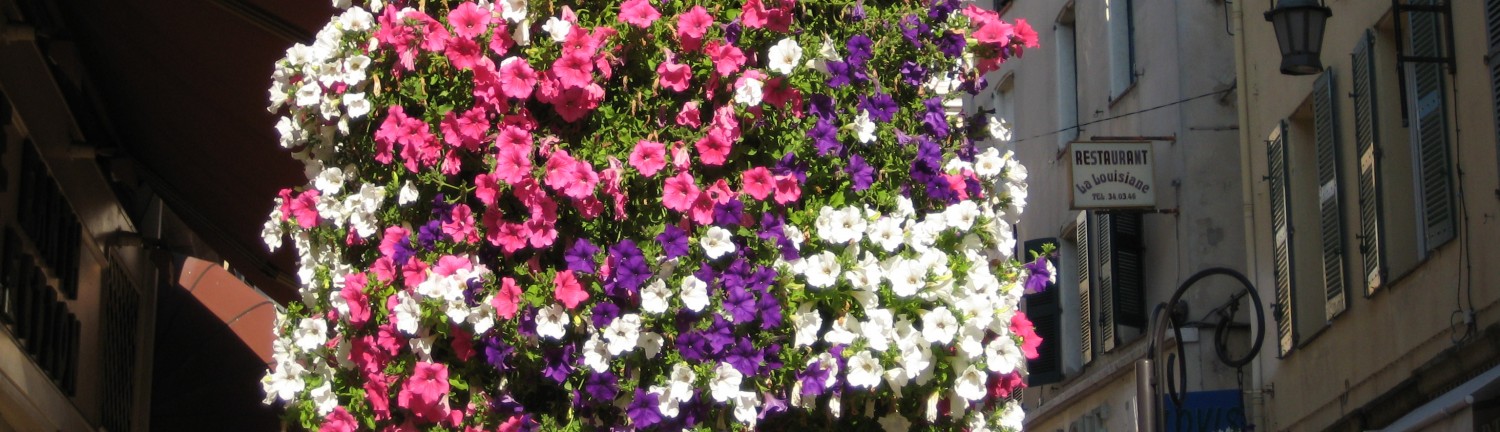
Overlooking the ranch

French Flicks You Might Actually Enjoy

A list at one of my new favorite blogs, BabyBilingual.blogspot.com, got me thinking about my own experience with French films.

It’s clear that your average French film greatly differs from your average Hollywood one. The French don’t insist on happily-ever-after Hollywood endings. French films tend toward serious and dark. Or just weird – even from a French person’s perspective. I’ve developed an appreciation for the differences, but sometimes, after watching a French film, I still can’t help but throw my arms up in exasperation.

Here’s a list of things I’ve said after watching French movies with my husband:

  • Is marital fidelity to the Frenchman simply too blasé to be considered as a lifestyle choice?
  • Are French people ever nice to each other?
  • Do French people actually like this movie, or do they just say they do so they seem deep and intellectual?
  • I’ve now spent so much time gazing at my bellybutton that my neck aches.
  • WTF? No, seriously, WTF?
  • I’m going to lie here and stare at the wall. I don’t have the energy to stand or even to cry. There’s no point to life, existence; it’s all empty.

Here’s a list of movies, in no particular order, that did not make me say those things. These are films I have enjoyed and recommend:

Amélie 2001  Whimsical and loveable, with Audrey Tautou. Nominated for 5 Oscars. It’s the French movie most people have heard of, if not seen.

Le Dîner de Cons (The Dinner Game) 1998  Hilarious, albeit a bit mean-spirited. One of the funniest movies I’ve seen. Plus, it has Thierry Lhermitte. Yum.

Après Vous 2003  Charming romantic comedy in which Daniel Auteuil, as nice guy Antoine, comically finds that no good deed goes unpunished.

La Doublure (The Valet)
2006  A valet must pretend to have an affair with a supermodel in order to keep her real affair a secret. With Daniel Auteuil and Kristen Scott Thomas.

Le Placard
(The Closet) 2001  Accountant Daniel Auteuil (I must like this guy) is about to be fired when he gives the impression that he is a closeted gay man, thus saving his job. With Thierry Lhermitte and Gérard Depardieu.

Prête-moi ta main (I Do: How to Get Married and Stay Single) 2006  Luis, a confirmed bachelor, has a mother and five sisters who are determined to see him get married.

Joyeux Noël (Merry Christmas) 2005  About a truce called on Christmas day during World War I. Nominated for Best Foreign Film

And for a completely different tone:

Le Pere Noël est une ordure (“Santa Claus is a Bastard”) 1982 Hilarious + Thierry Lhermitte.

Paris, Je T’aime 2006  Eighteen short films set in the different arrondissements of Paris. Plenty of star power in both actors and directors. Some of the films are weird and indecipherable, some are sweet, some are hokey, some are fun. Overall, really liked it.

Le Scaphandre et le Papillon (The Diving Bell and The Butterfly) 2007  Based on the autobiography of the same name, Jean-Dominique Bauby suffers a massive stroke followed by locked-in syndrome. The book is stunning, well worth the read. Even though he hated his physical therapist. I would too, after reading his description of his experience.

L’Auberge Espagnole 2002  Fun story about cultures clashing, love found, love lost, with the adorable Audrey Tautou in a small role.

Les Choristes (The Chorus) 2004  Beautiful story of a teacher who makes an impact. Nominated for best foreign language film.

La Grande Vadrouille 1966  French comedy that was the most successful film in France until Bienvenue Chez les Ch’tis. Great fun with two Frenchmen trying to help the crew of a shot down Royal Air Force Bomber escape German-occupied France.

Bienvenue Chez les Ch’tis (Welcome to the Sticks) 2008  According to Wiki, this broke nearly every box office record in France, including the long held record for La Grande Vadrouille. Hilarious. Great for French language learners, as it pokes fun at regional accents and expressions.

Un Long Dimanche de Fiançailles (A Very Long Engagement) 2004  Audrey Tautou searches for her fiancé, who disappeared while fighting in the trenches in WWI. Two Oscar nominations.

Hors de Prix (Priceless) 2006  Audrey Tautou (again!) plays a gold digger who mistakes a bartender for a wealthy target.

Delicatessen 1991  Okay this one freaked me out when I first saw it, but on a second viewing when I was older and more accustomed to French humor, this dark-humored, post-apocalyptic sci-fi movie had me cracking up laughing.

Le Papillon (The Butterfly) 2002  Charming story of a widowed butterfly collector and the friendship he develops with his neighbor, a lonely 8-year-old girl.

Rififi 1955  Gritty noir film. Great.

Le Corniaud (The Sucker) 1965  Hilarious gangster parody.

What have I missed? What are your recommendations? Thoughts? I’d love to hear them – always looking for things to add to our Netflix queue!