French Children’s Books

 A friend of mine sent me this link to an article published in the Guardian on Terrifying French Children’s Books.

I’m torn in choosing a favorite among La Visite de petite mort (Death visits a little girl. He kills her), Le Voleur de Lily (The Thief of Lily – Lily is kidnapped), or Le Jour où Papa a tué sa vielle tante (The Day Daddy killed His Old Aunt – true crime for 7-year-olds).

French children’s books, like French movies, aren’t big on the whole “and they lived happily ever after forever and nothing bad ever happened again and everyone was delighted for always” endings. Moral messages don’t seem to be present in many books, either.

We are amassing a collection of French children’s books in our home. There’s one collection of pop up books that particularly caught my eye for their great art and classic stories, so I ordered several of them from Amazon.fr. Then I read them. Starting with Le petit poucet. Petit Poucet (Little Thumb) is the youngest of seven children. His parents run out of food and decide to abandon their children in the forest. Petit Poucet leads his siblings back to their home, so their parents take them out and abandon them, again. Successfully, this time. The children are captured by ogres who plan to make a fine meal of them, but Petit Poucet tricks the ogre into eating his own children instead. Woo hoo! Happy ending!

That book is no longer in our house. I can just hear my daughter every time we go hiking: “Mommy! (sob, sob) Are you going to leave us here so the ogres can eat us?”

There’s the classic: Alouette, gentille alouette. How many people actually know what the words are, other than the chorus? It’s about plucking all the feathers from the bird, then dismembering it. Slowly. While singing an upbeat tune. But the pictures are so pretty:

DSC00415

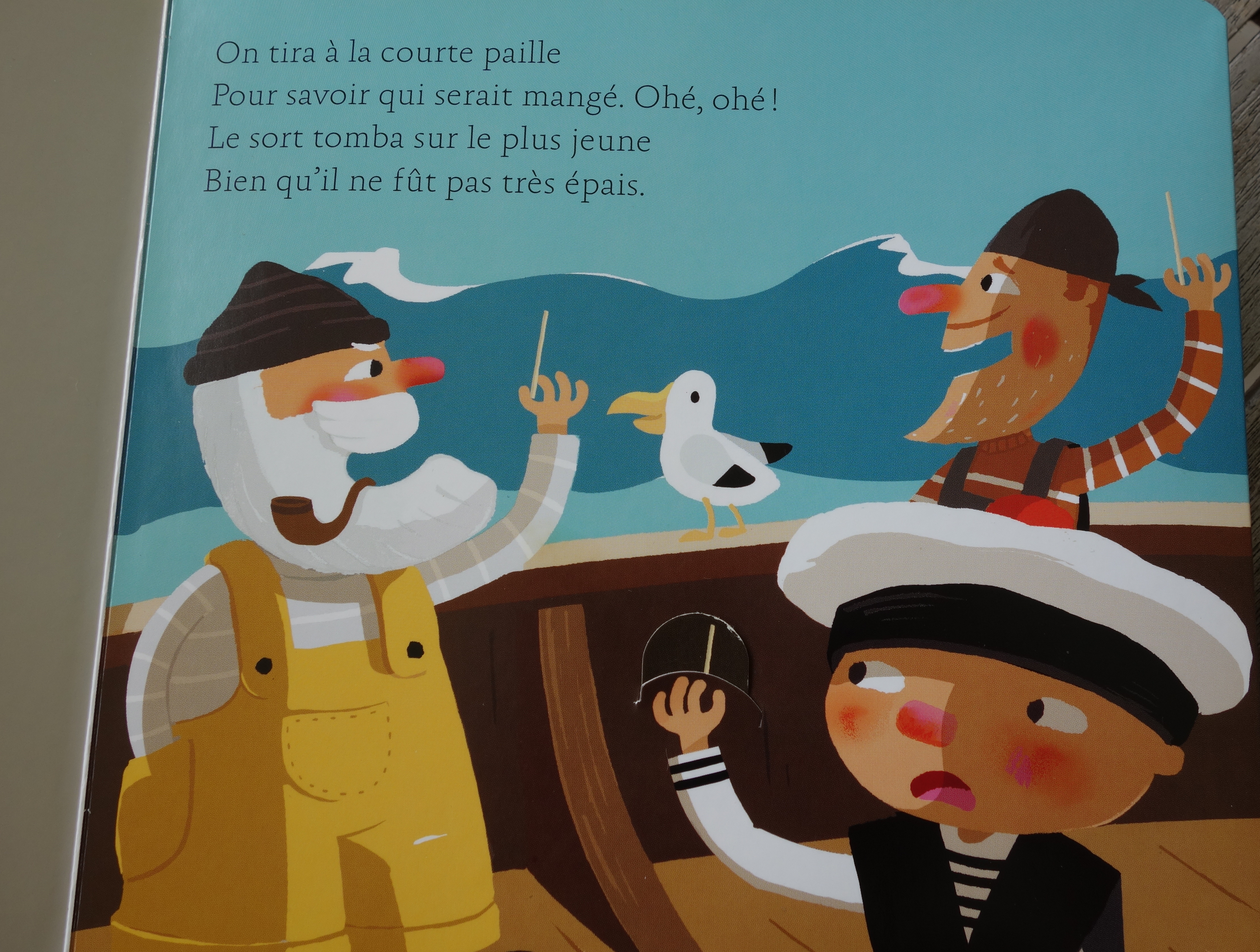
Il était un petit navire: There was a little boat. The sailors run out of food and draw straws to decide which crew member will be dinner.
DSC00416

A little boy draws the short straw and as the men discuss how to cook him and what sauce to use, he prays to the Virgin Mary to save him.

We're coming for you, little boy, with our sharp shiny knives!

We’re coming for you, little boy, with our sharp shiny knives!

DSC00418

Happy ending! She does. In our version, anyway. Not so much in the traditional tale.

This pop up picture causes my poor son to burst into tears, every time. Le chat botté (Puss in Boots) is pretty freaky here:

 DSC00421


Granted, plenty of our nursery rhymes, songs, (Ring Around the Rosie, anyone?) and old fairy tales aren’t exactly geared for the modern child. But so many have been Disneyfied that we’ve become accustomed to happy endings, justice being served, and a palatable moral message. Though I still have huge issues with the Little Mermaid. She gives up her home, family, fins, and voice for a man? Ugh. Yes, honey, but the prince is so handsome!

Many of our most familiar fairy tales were first penned by Charles Perrault, a Frenchman who lived and wrote in the 17th century and who is known as the initiator of the literary fairy tale. Cinderella, Puss in Boots, Sleeping Beauty, Little Red Riding Hood, Blue Beard, and my favorite: Le Petit Poucet… all come from Perrault. He called his collection: Tales of Mother Goose. Château de Breteuil, just outside of Paris, has plays and displays all featuring the tales of Charles Perrault, plus beautiful gardens to wander through.

Beauty and the Beast, or La Belle et La Bête, was written by frenchwoman Jeanne Marie LePrince de Beaumont (the version as we best know it).

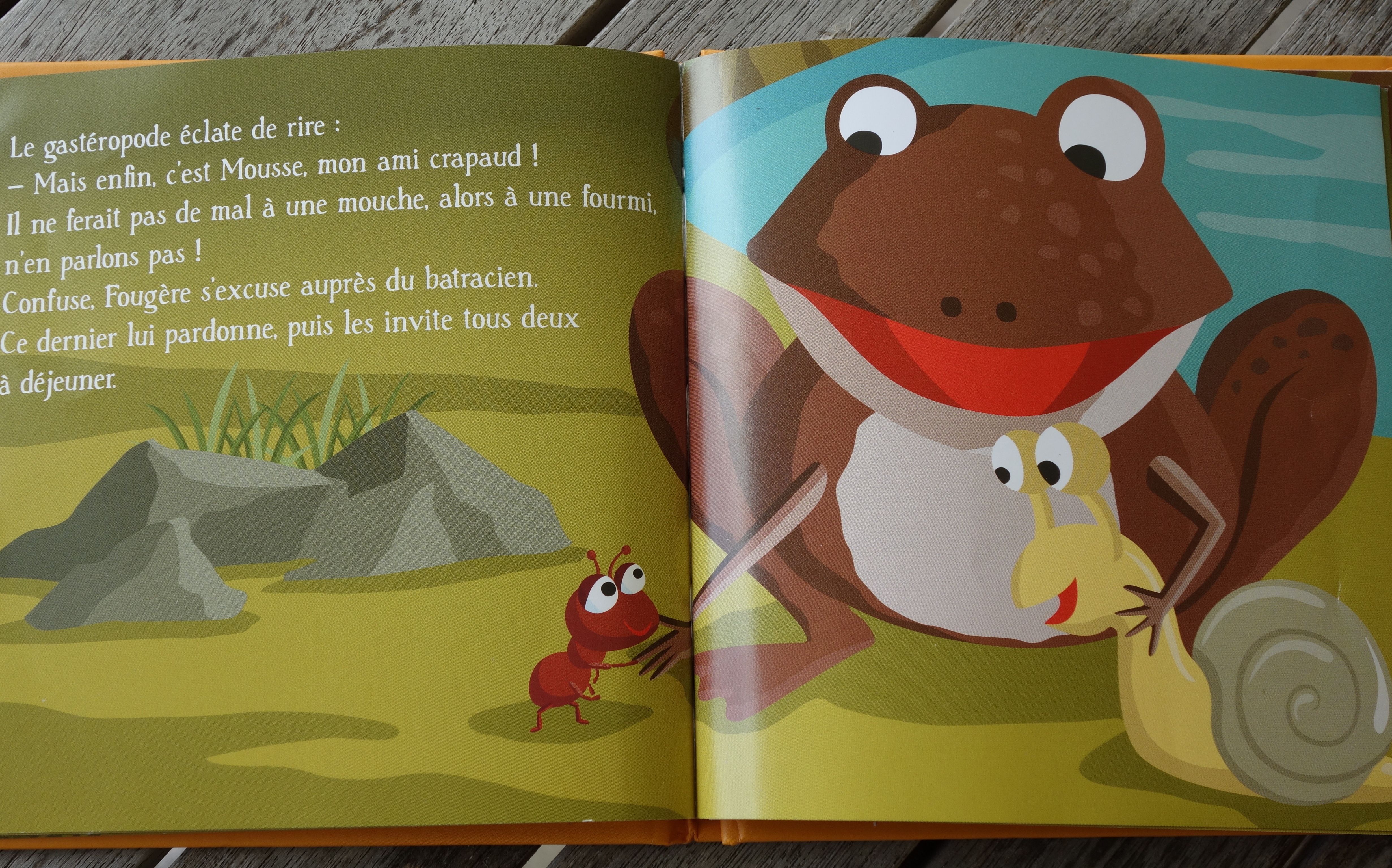
We have found several books that we enjoy. I love this little book, especially the illustrations, that I found on our last visit to France: La Fourmi voyageuse: The adventurous ant. It’s about a hardworking ant who is persuaded by a snail to leave his work and explore the world – “there’s hundreds of you working. No one will notice if you are absent for a moment!” The ant decides to ditch work and explore and he has a wonderful adventure and makes new friends:
DSC00424

When he returns home, he tells the other ants of his adventures. The queen decides to give each ant some free time so they can all explore the forest, too. Hmmm. Sewing the seeds of, oh dear, dare I say the icky word, socialism? Pretty soon those ants will be expecting eight weeks vacation and free health care.

DSC00425

The Petit ours brun series and T’choupi, both of which are also cartoons that are easily found on You Tube, are favorites.

DSC00422

DSC00423

Babar is also one of my daughter’s favorites, though Babar’s mother is killed by a hunter (much like Bambi). We skip over that part for now.

DSC00431

Misbehaving Mini-Loup (little wolf) is always wreaking havoc:

DSC00426

But he usually pays for it:

DSC00427

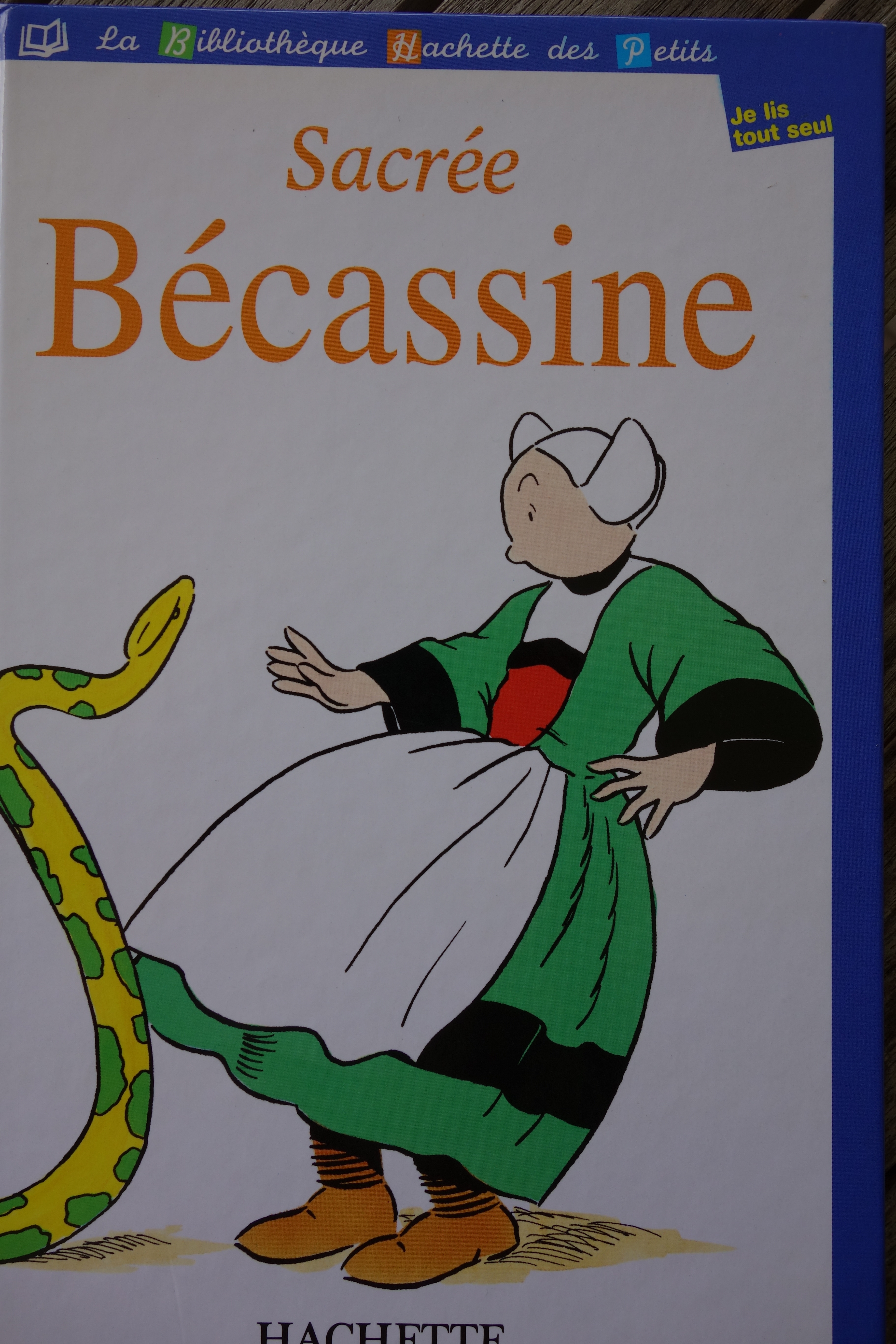
Then there’s Bécassine, the French version of one of my English favorites growing up: Amelia Bedelia:
DSC00428

I look forward to visiting bookstores next time we’re in France. Any suggestions out there for children’s books we should read?
The Rose Colored Glasses Wiped Clean

 342 Stone garden

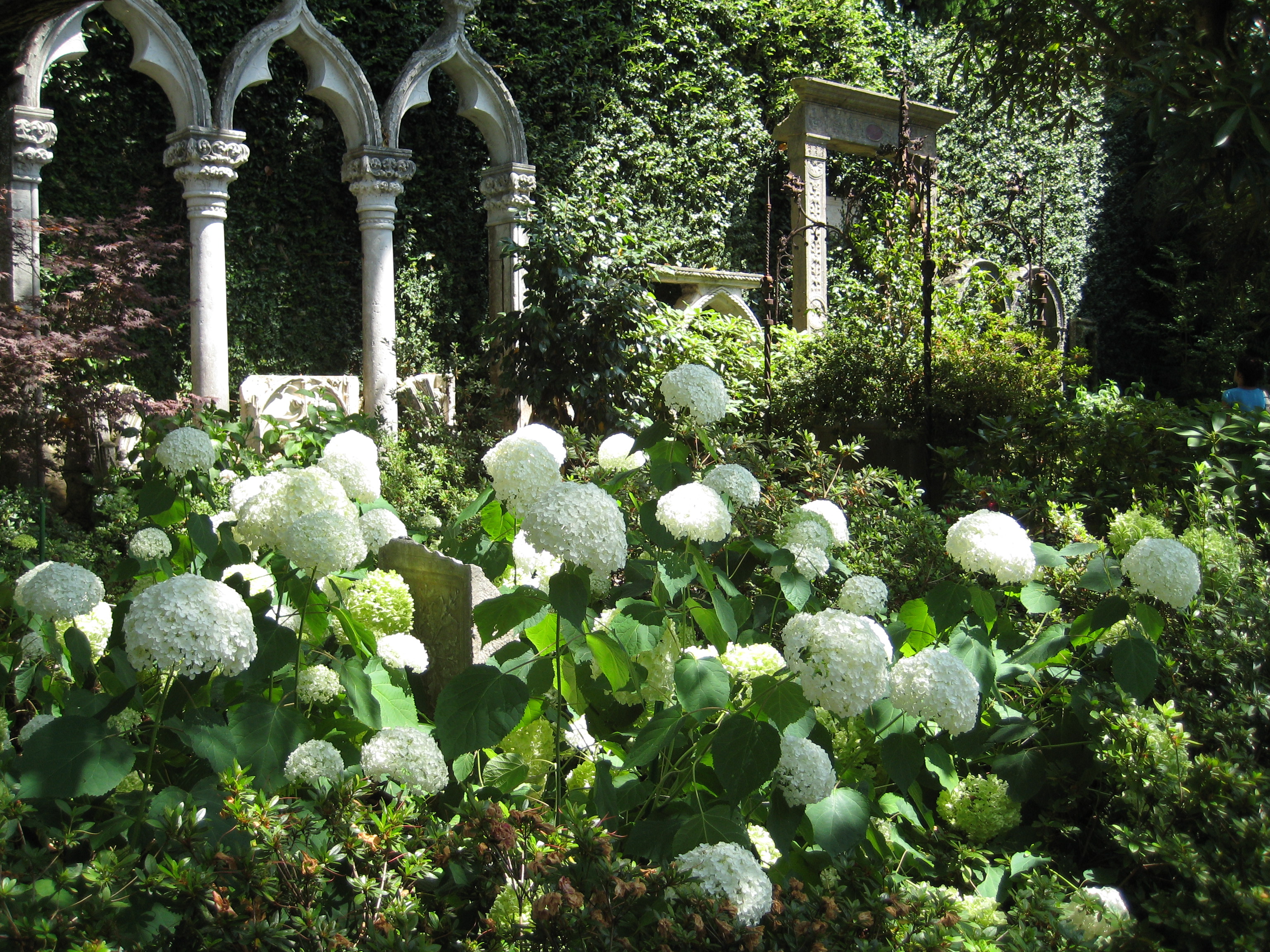
I wrote this five years ago after spending most of the summer in Antibes, France. That was the summer France lost some of its magic for me, but that isn’t a bad thing. It became a real place – one with flaws as well as astounding beauty – rather than the idealized fantasyland of my European dreams (which wasn’t such a bad thing either). France still holds magic for me, and when I gaze upon her lavender fields, explore her old castles, or walk her cobblestone streets, I live some of my happiest moments.

I’m back in San Diego after our summer stint in the south of France. I’ve spent a lot of time in France and have devoted much time and effort to mastering the unmasterable French language. This recent trip was a test for us.  Exam question: Do we want to move to France? Answer: The jury is still out.

France, for me, particularly the south, has long been an idyllic escape, a locale I long for when I’m away. After all the time I’ve spent there, I still idealize the place, even if it means subconsciously denying its imperfections.

There is such joy, and magic, in being in a foreign country – new sights, smells, sounds. But part of that comes from not knowing what exists in its dirty underbelly. In seeing only the glamorous parts meant for the tourist’s amazed eyes, and not having to deal with the day to day aspects of living there. Part of that magic also comes from not knowing what is being said around you.

One afternoon, after hitting the beach, I was absolutely overheated. On my walk home past the chic private beaches and touristy shops that spilled their postcards, film (people still buy film?), beach towels, and bikinis onto the sidewalk, I didn’t pass one of the many ice cream shops. Instead, I stopped for some of that devine delicacy, a gob of gastronomic goodness, a jolt of gelato, yes – bliss on a baked waffle cone.

As I walked away with my temporary treasure, it of course began to melt, so I stopped in front of a shop window to eat some of it and ensure that I didn’t arrive home covered in telling chocolate drips. An older man, short and stocky with a genial smile, walked by and said something to me. It took a minute to process what he had said, so enraptured was I in waffle cone wonderland. So, for a brief moment, I existed in that blissfully unaware state that always occurs when I’m traveling in a country where I don’t speak the language. I saw a sweet little old local, probably flirting with me judging by the way he was smiling, or perhaps recommending a pair of shoes from the window I was absently eyeing. He stopped to watch me, and then my brain finally processed what he’d said:

“You’ll get fat if you keep eating like that.”

Jackass. I liked you better when I had no clue what you were saying.

Snappy comebacks aren’t my forté – though they come to me later in numbers. When offended, I revert to a wordless, helpless little girl.

But perhaps my actions in that moment spoke louder than words. I shrugged and took another big lick. Did that translate, monsieur?

Villa Rothschild on  St. Jean Cap Ferrat, magic and beauty in the south of France

Villa Rothschild, St. Jean Cap Ferrat, magic and beauty in the south of France

Learning French With My Daughter

Despite research to the contrary, code-switching seems to be working for us.

While my daughter’s English is soaring, her French has been lagging. I mentioned in a previous post that I was making a commitment to speaking more French at home. My husband only has a few hours each day with our kids, and while he speaks to them in French, my daughter responds in English. He and I speak to each other mostly in English. So, I’ve started reading more French books, playing more French songs, and speaking more French to the kids and when we are all together. I’ve been practicing my pronunciation in the car with some CDs, and my daughter pipes in with me, her high-pitched toddler voice perfectly enunciating each vowel and rolling those “r”s. She is now speaking in full French sentences. She still veers toward English, but will repeat after me when I translate her words to French. My French has improved, too. Success!

Right now, French is fun for her. She likes to point out what language people are speaking, and she’s asked more than one of our friends if they speak French or English. She’s in a French preschool two days a week, so she’s hearing lots of French there, too. I worry what will happen if we no longer have the ability to send her to French immersion school. Will she hate French? Think of it as work, or something that makes her different and therefore something she rejects? I dream up all sorts of solutions: we’ll spend summers in France! I’ll create a curriculum and teach French in whatever preschool/elementary school she ends up in! We’ll find playgroups full of French speakers! I’m nothing if not determined. My favorite solution is undoubtedly summers in France. I’m thinking Provence….

Here’s an interesting new phenomenon: my daughter is well beyond babbling in English, but she’s been babbling nonsense words with French sounds. I wonder if this gibberish is because she’s trying out the French sounds she’s heard (my MD says they see this a lot in kids that are exposed to multiple languages) or if she’s trying to babble like her little brother, who’s getting a lot of attention for all the cool new sounds he’s making.

Her English is progressing well. She chatters away, using verb tenses mostly correctly and picking up vocabulary at an amazing rate. Those little preschooler minds are amazing things. She also makes mistakes but I can see the logic. My brother asked her the other day, as she ate a banana, if she was a monkey. She said, indignantly, “I amn’t!” instead of “I’m not.” The logic makes sense. After all, so many of our contractions are with the verb, not the subject.

Fascinating stuff, this language development. It makes me want to go back to school and study linguistics, as well as child development. Plus French history, French, English. Is there a job out there where I can just go to school all the time? That’s the job I want.

Fondue and Mousse Au Chocolat

I turn my dinner guests into guinea pigs. My first attempts at a new meal are often when we invite friends over. So far, no one has complained. Fondue is an old stand by, but this was my first attempt at chocolate mousse.

May isn’t the best month for fondue, but it was requested by my friends back in March, then the dinner kept getting pushed down the calendar… did I mention I live in California? This is what we do. Luckily, last week was cold and rainy, so fondue turned out to be the perfect remedy.

DSC00161

DSC00168

Two things broke me out of my Kraft Mac and Cheese habit from college. One – a good girlfriend who was a brilliant cook. I started hanging out at her house, learning what I could. Thank you, Shawna! The second – my husband. On our first “Come on over for dinner” dates, I served him quesadillas and spaghetti with packaged sauce mix. He was gracious and complimentary. So I tried something a little more complicated. He was more complimentary, even excited, and cleaned his plate. So I kept trying. I stopped using packages and started using fresh ingredients. I got bolder, more experimental. Today, my friends know me as a really good cook, and I’m convinced it’s the reason our parties are always so crowded. And to this day, my husband has never once said a bad thing about anything I’ve cooked. At worst, he’s been silent, and when I say something like, “That was horrible, I’m sorry,” he’ll pat my hand and say, “it wasn’t your best effort.” So I keep at it.

The chocolate mousse was a recipe that, six or seven years ago, I would have taken one look at and decided to buy a gallon of ice cream instead. Lots of steps, constant stirring, and temperature dependant… but it came out fantastic.

DSC00172

The Trouble With French…

 … is all those vowel sounds. Oh, and the “r”s. And the faux amis. Maybe I should just quit now.

The thought of quitting enters my head on a daily basis lately. My Phonetics and Oral Proficiency class wrapped up this week. Yesterday I listened to a recording of myself reading Enivrez-Vous by Baudelaire that I made the first week of class, and I cringed and squirmed in embarrassment. I know I’ve improved since then. The vowels that were once a mystery to me are now decipherable. The rolling “r” has improved, slightly. But rue and roue still elude me (read here about my experiences with these petit mots). Every time I say one of these words and my husband smiles and says, “You’re so cute,” I want to throw my textbook across the room and shout, “I quit!”

I have to remind myself how far I’ve come, and that progress is now measured as fine-tuning rather than huge leaps. My comprehension and pronunciation is much better than it was four months ago. Let alone when I first met my husband. We occasionally spoke French together on our first dates, and on one of these I was explaining to him that my neck, mon cou, really bothered me sometimes, but when I rested it or got a massage, it felt much better. Cou, phonetically, is [ku]. Not far from [ky], or cul, which means ass. I often confused the two. So as I spoke, he nodded and fought a smile, then laughed and told me he hoped massage and rest would help my aching ass.

More recently, when our daughter sang her French song about a hen sitting on a wall, as she got to this part: lève la queue et puis s’en va, I nearly choked on my water à la Jon Stewart style. Queue, the word for tail, is again close to cul to the untrained ear. I asked her to repeat what she’d said, and then realized that she wasn’t, after all, singing about a hen who sat on a wall and then decided to pick up her ass and leave.

I’ve spent a lot of time practicing vowel sounds. I think I’m finally distinguishing well between deux and douze (two and twelve), and I might even be able to order un croissant without waving one finger in the air (or a thumb, as one finger also confuses the French) to make it clear how many I’m asking for.

My face hurts after I speak French. There’s a lot more movement and tension in the jaw and cheeks in French than in English. You can tell a French person from a distance by the way their mouth moves when they speak and the tension in their facial muscles. English vowels are kind of lazy, really. We warp them to make it less of an effort for ourselves. Don’t believe me? Try the words “can” and “than” on their own and then in a sentence or two, and see what happens to those poor little “a”s. Our professor jokes that we must exercise our mouths to tone up our speaking muscles for French just as we would exercise our bodies for a sporting event, but it’s true. It’s a completely different way of using our face and tongue and vocal cords.

As my vocabulary improves, my confusion over faux amis lessens. When we got married eight (!) years ago, we wrote our own vows in both French and English. I, not wanting to humiliate myself in front of his family, read them to him before hand to make sure I hadn’t made any huge errors.

Thank God for that.

As I explained that I was so happy to be starting our lives together and excited for our future and that I hoped I could make him as happy as he’d made me (these sappy words were the only ones I could manage with my rudimentary French), he nodded and gave me a wolfish smirk while wiggling his eyebrows.

“I hope so, too,” he said.

“What? What did I say?”

This is how I found out that in French, the word excité is only used in a sexual sense. Turns out I was about to announce, in front of all of our friends and family, that I was horny and hoped I could satisfy him.

When I remember these things, and how far I’ve come, the thought of quitting seems preposterous. A friend recently pointed out to me that I’m an overachiever and I should cut myself some slack. The thing is, too much slack and I get antsy and bored. So I might as well keep on with this French stuff.

DSC00253

Beautiful Saturday at the Farmer’s Market in Little Italy

DSC00201

Intimidated by trying to find parking, I’ve never visited this farmer’s market. But my daughter and I were in Little Italy this weekend so we checked it out. It’s huge, maybe even bigger than our usual one in Hillcrest. The views are fabulous:

DSC00193

The music sophisticated:

DSC00194

And they have crêpes. Authentic ones, from Fabrison’s French Crêperie Café, also located in Little Italy. This restaurant has great food, and their crêpes are the real deal: the savory ones are done with buckwheat flour. Hard to find outside of Bretagne, but this is the way a savory crêpe is meant to be. I split a Nutella crêpe with my daughter and chatted with Fabrice, owner of the café, about the challenges of raising kids in a bilingual household (his wife is American) and what we do to try to make sure our kids are learning French.

DSC00197


DSC00195

Here are a couple more photos. Spring is blooming in San Diego!

DSC00200

DSC00198


Lost in Translation: Menus and Restaurants

I see these restaurants in France all the time:

326 Only in France

Because all Asian food is pretty much the same, right? And no, this is not some trendy fusion restaurant. Out of curiousity, I tried one once. It was a bland, fast food type of cuisine that amounted to soggy vegetables and meat bathed in either soy or teriyaki sauce. Nothing like the widely varied and often spicy dishes that could be offered from any of these countries. For a country so renowned for its food, France has a lot to learn about the cuisine offered outside its own borders!

Poorly translated menu items are part of the charm of traveling abroad. We had some classics in China; I lost track of how many times we said, “What the what!?” Here are a few gems:

IMG_1581

IMG_1582

IMG_1583

Then there was the beachside restaurant in a small Cote d’Azur village where I’m pretty sure they weren’t really serving “wolf” and where I decided to avoid the “crusty of salmon” altogether.

Here, in the U.S., we find plenty of mistakes. There’s the most obvious: the use of the word “entrée.” It means the first course, entering the meal if you will. But in the U.S. we almost always use it for the list of main dishes. Then there’s a restaurant near us called “La Café.” Decent food, but my husband gets a nervous tick every time we pass it because “café” is masculine, so it should be “Le Café.” Gender mistakes don’t bother Americans much because we don’t use them. But imagine the irritation that those of us grammar lovers experience when someone uses a double negative: “I don’t have no bread,” and you can see how my husband must feel.

At a nice, upscale San Diego restaurant my husband ordered the bouillabaisse. He used the French pronunciation, boo-ya-bais, or for the phonetically inclined: [bujabes]. The waitress asked him to repeat himself several times, then exclaimed:

“Oh! You mean the bool-a-bass-ey!”

Yes. That’s it exactly.

It can be a challenge, trying to order a croissant or any other French food here. My tongue wants to use the French pronunciation, but then I get looked at either in confusion, or I get a big eye roll because clearly, I’m being pretentious. Using the American pronunciation ensures that I will be understood, but it’s like fingernails on a chalkboard to me.

I’d love other examples people have experienced with menu items that got lost in translation. Bring them on!

My French Hubby Meets My Cowboy Cousins

The old and the new at the ranch

The old and the new at the ranch

I come from cowboy stock. The real deal. Cattle ranchers, living in a beautiful bit of wilderness at the Arizona-New Mexico border. The ranch has been in my family since 1891. My grandmother was raised there; her mother rode a horse the 27 miles out of the canyon to get to a hospital for my grandmother’s birth, her first of five children. (They opted for home births after that trip!) To get to the ranch now, we ease our 4 wheel drive down the gravel switchbacks, cross the river a couple times if it’s low enough and if not, ditch the car and call my family to come get us in the tractor.

Today, my dad’s cousin runs the ranch. In his soft-spoken drawl, he tells us the ranch belongs to all of us, it’s just his watch. Though I’ve never lived there, there’s a part of me that is connected forever to WY Bar ranch on the Blue.

It took far too long to take my husband on the long trip to the Blue (the town – which consists of not much more than a one room schoolhouse – is Blue, named for the river/creek that runs through it, but we’ve always said, “the Blue” or “on the Blue”). Coming from Paris, he was fascinated at the thought of meeting real cowboys and seeing an honest-to-goodness cattle ranch. When we finally made the trek, he stared out the window in silence, murmuring from time to time, “Wow. This is beautiful.”

We sat up late into the night talking with my aunt and uncle (really my “uncle” is my dad’s cousin and my first cousin once removed, but we call him “Uncle”), eating meat and potatoes and drinking stiff Hot Toddys. The state cattle inspector came by to check on how things were going, make sure no cattle had been lost to wild animals or accidents, make sure all was well. He sat down to chat with us.

After three words from my husband’s mouth, his face contorted and he leaned forward, staring at my husband.

“Where you from?”

“I’m from Paris.”

“Huh?” He turned to me, perplexed. He couldn’t understand my husband’s accent, which isn’t really all that thick.

“Paris. France,” I said.

“Huh. What’s it like there?”

My husband hesitated, unsure how to answer. “Um, well, Paris is a big, really old city. The country is a lot of rolling hills, rivers, there’s lots of little villages, nothing like this here – ”

“You got cows there?”

“Yes. There are cows.”

The inspector nodded and seemed satisfied.

257 Bro's pics of Jim's memorialOne night we gathered around a campfire, listening to my cousins and their friends tell stories of their different cowboy adventures, drinking beer. It was 17 degrees out, so we pressed as close as we could to the fire. When we all turned to warm our freezing backs, one of the friends drawled:

“We’re all warmin’ our buns, but Stéphane there, he’s warmin’ his croy-sants.”

My husband said he felt like he’d stepped into a movie, into a world and lives he hadn’t known existed.

My uncle listens to my cousins and me tell tales of wandering the planet, of our adventures exploring various European cities, living abroad, trekking through South America, and he smiles and shakes his head, then says in his soft drawl, “It’s just so neat how y’all get out and see the world. Between y’all, you’ve been just ‘bout everywhere. Me, I just about never been on an airplane. I don’t much like being away from home.” It’s so different from the life I know, and I love him all the more for it. I know a little bit about a lot of different places and I pat myself on the back and feel so worldly. My uncle will laugh and call himself a hick, but to me, he’s classic America. He’s got his home on the range, he works hard from dawn to dusk and then some, he knows every craggy cliff, every stone, every stretch and bend of the Blue River. He loves his life, his home, his country. There’s poetry to that.

I envy him sometimes, to which I’m sure he’d scoff. I forever battle between searching out adventures, jumping into all the unknowns I can find, versus the desire to find a place I can set down some roots and truly feel I belong; to find that which eludes me: the feeling of yes, I am home. My cowboy cousins, they know where they want to be. They have generations of history behind them, rooted to Blue, AZ. They are Home, and they live it, breathe it, love it.

My wanderlust must come from my grandmother, the same one who was raised on the ranch. gmagpacalShe and my grandfather lived all over the world: Chile, Mexico, the Virgin Islands, Puerto Rico, Kuwait, Denmark…. Her home was decorated with Persian rugs, African Tribal masks, blue and white Danish dishes. She introduced me to eating croissants for breakfast. She would have loved to meet my husband. I wish I could talk to her now – about her adventures both growing up on an isolated ranch and then as the worldly woman who smiled so broadly in those photos taken around the globe. From cowgirl to world traveler. What an adventure.

I look forward to taking my kids to the ranch and letting them wade in the river, run through the forest, meet my dear family. It’s as much a part of their heritage as is France.

Overlooking the ranch

Overlooking the ranch

Texans in Tahiti

085 Toatea lookout

I’ve been longing for French Polynesia. Palm trees, exotic fish, gentle breezes and sailing a catamaran while my fingertips trail in the clear blue seas…. We spent our honeymoon there, enjoying the warm waters and savoring the food and culture that was such a beautiful mix of Polynesian and French. One of many images stuck in my head: a local, decorated with tattoos and jagged scars (many locals sported these: rough encounters with the coral reefs and, sometimes, sharks), riding a scooter down a muddy back road with a half dozen baguettes jutting out from a sling on his back. Our vacation there was every bit as idyllic as every cliché about Tahiti professes it will be.

Tahitian bottle opener. Check out the scars on his arm!

Tahitian bottle opener. Check out the scars on his arm!

Except for the Texans.

I’ve been to Texas a few times and I’ve found the locals gregarious and welcoming. But for some reason, we kept running into the worst of their lot on our trip. It started with a group on a snorkeling trip in Moorea: two couples, both from Texas, were loudly comparing the cost of their tickets, and their hotel rooms, and how much they’d paid for their excursions, and then how much their homes cost in Texas. Meanwhile, the guide asked for a show of hands for who spoke French and who spoke English. The group was evenly divided, so he said he would explain everything first in French, then in English. As he began his first French explanation, the Texans broke from their money talk to stare at him, then one of them shouted: “ENGLISH! We speak ENGLISH!”

Later, on Bora Bora, our resort was hosting a large group from Texas and while we and every other honeymooning couple on the planet tried to enjoy our romantic tiki torch-lit dinners on the sand, the table of 15 from Texas shouted and guffawed and threw bread from one end of the table to the other, prompting the staff to ask them more than once to calm down.

the Blue Pineapple on Moorea, where we first tasted poisson cru

the Blue Pineapple on Moorea, where we first tasted poisson cru

Then this: We fell in love with poisson cru while we were there; it’s the local traditional dish and so simple yet delicious that I’ve made it several times since. I’m salivating just thinking about it. Our resort offered a class on how to make the dish, so my husband and I joined a few others, including a Texan couple, complete with teased hair and twangs, to learn of the long held tradition of poisson cru.

Conquering the coconut

Conquering the coconut


Our instructors were all locals. We began with the diced raw ahi, to which we added squeezes of lime juice, then onions, tomatoes, and cucumbers. Next, we cracked open a coconut (way harder than it looks) and squeezed milk from the meat of it over the dish. And voila! It’s that simple.

As we all savored a plate full of the dish, the woman from Texas smacked her lips together and proclaimed: “I bet this would be real tasty with a bit of May – o – naise!”

Poisson Cru

Poisson Cru

My husband tried not to choke laughing, and I, not always great at holding back, said, “Blasphemy!”


And now, more photos from our trip, lest you fear we greatly suffered:115 Sunset from deck

Bora Bora

227 what a life!

Merde

Often, when we learn a new language, the first words we learn are the swear words. This was true for me with Spanish – as a kid, when my dad worked on the family car, I learned all sorts of fantastic Spanish words. Perhaps he believed that if he swore in a different language, his impressionable little ones wouldn’t pick up on it.

Oh, but we did.

With French, though, it was different. I began studying French when I was 28 with the sweetest, most patient French professor ever. (Madame Loiseau – merci pour tout!) I didn’t give much thought to enriching my vocabulary in that direction; I needed to say “hello” and “goodbye” and “sorry about that, I’m a huge klutz.”

A year later, while living in Paris and attending a French immersion program, I spent mornings before school watching Inside the Actors’ Studio, broadcast in English with French subtitles. The host, James Lipton, always wrapped up the show by asking each actor he was interviewing the same five questions, one of which was, “What is your favorite curse word?”

Thus, I learned the good stuff.

The funny thing, though, is it all sounds like nonsense to me. A lot of these words have no direct translation, and since I don’t always know the connotation and I’m not used to hearing them used, I don’t have a good feel for how vulgar or tame they really are. Merde, for example, is somewhere on the scale between “crap” and “shit.” A kid will get in trouble for saying it, but an adult throwing it into normal conversation, even in a French class, will at most garner a few giggles. The word putain is listed in my French/English dictionary as “whore” or “goddam” or “bloody” if you’re British. But actually it’s France’s equivalent of the “f” word.

Enter my brother-in-law. I adore my brother-in-law. But sometimes, when he talks, I wonder if I really do speak French at all. He uses so many colloquialisms and slang words, plus he mumbles, so I can hardly follow what he’s saying. And – he’s got a potty mouth.

I learned some new words from him on a trip to France a few years ago. A woman walked off the train with his suitcase when he came from Lyon to Antibes to visit us one weekend.  Several hours later, she called him to let him know about the “mix-up.”  When he hung up his phone, he said, or rather yelled, “Grosse Conne!”  Literally, it translates to “huge idiot.”  No big deal, right?

Back in Paris a few weeks later, we were joking with my brother-in-law about the incident, and I mimicked the way he had yelled at his closed cell phone. I didn’t quite yell it, but I said it loud enough that my mother-in-law came running into the room in a state of panic and cried, “C’est Carol? Ce n’est pas possible!” (“Was that Carol?  It couldn’t be!”)  I suddenly felt like I was a misbehaving twelve-year-old. So I did what any twelve-year-old would do: I blamed it on someone else. “He taught it to me.” Turns out grosse conne is quite a bit more vulgar than “huge idiot.” Which is impossible to know unless you spend time around native speakers and embarrass yourself several times. I try to take the safe route – I want to know these words and phrases so I can tell if I’m being insulted, but I tend to not say them.

Except for merde. I like that one.

[Full Disclosure: This was originally published on my author website in 2008]