Pas Mal

We visited a French friend’s home recently for the first time, and when I walked into their La Jolla area abode, complete with floor to ceiling windows and a spectacular view, I exclaimed: “This is such a fabulous house! Wow!”

My friend answered, with an indifferent shrug, “C’est pas mal.”

I stared at him. “That’s such a French answer.”

“Oui. There are some that are better, some that are worse, so: pas mal.”

And there you have it: French culture and American, juxtaposed. We Americans tend to be enthusiastic, perhaps overly so, of even the most mundane of things. “Oh my god, there is nothing better than potato chips. These ROCK.” Everything is awesome, amazing, choose your superlative. The French, on the other hand, can’t seem to muster up excitement about anything.

There’s little difference, for example, in how they describe something that’s great versus how they describe something that sucks: “C’est pas mal.” It’s not bad. This describes anything from something good to something fabulous. Then there’s: “C’est pas terrible.” Literally: It’s not terrible. This describes something awful.

As an aside, the word “terrible” in French is almost always used in the negative, except when it’s not, like here: C’est un truc terrible. Translation: It’s awesome.

Then there’s the typical response to someone proposing a great idea. Here, we’ll say, “What an amazing idea!” or something equivalent. The French will more typically say, “C’est pas bête,” Translation: That’s not stupid.

It’s easy to assume from all of this that Americans are shallow, fake, insincere, and that the French are a bunch of negative duds. No wonder we have so much trouble understanding each other!

Our interpretations of others are colored by our own biases, opinions, experiences, and of course, our cultural understandings. It is easy to generalize something, as I have above, that in truth is much more complicated and nuanced.

It’s also true that my friend’s house is really freaking awesome.


Bastille Day/ La Fête Nationale

Arc de Triomphe on Bastille Day

Arc de Triomphe on Bastille Day

July 14, Le Quatorze Julliet, marks the French holiday we know as Bastille Day. Not surprisingly, the origins of this holiday are un peu compliqué. Two key events in the French Revolution share this date.

The first: In 1789, the people of Paris, fearful that their representatives would be attacked by the royal military of Louis XVI and desiring ammunition and gunpowder for a possible battle, stormed the Bastille, a prison in Paris that held citizens under not so just cause and without rights to appeal. Often, prisoners were held there because of anti-royal writings.

One year later, on July 14, 1790, there was a huge feast to celebrate the conclusion, or so they thought at the time, of the French Revolution. Apparently the feast lasted 4 days and concluded with fireworks, fine wine, and running naked through the streets.

Pétanque in Provence

Pétanque in Provence

While we didn’t run naked anywhere, we did celebrate the holiday. We kicked it off with a pétanque tournament; I was partnered with a lovely Englishwoman named June and while we held our own, we were eliminated early in the tournament. It’s quite possible that my problem was I didn’t have a cool straw hat like most of the experienced players. No big deal, I was hungry and I forgot how long those games last! The French-American Chamber of Commerce sponsored a barbeque, concert, and pick-up soccer and volleyball games, so we had plenty of time to eat and play with San Diego’s French and Francophile community. It was a perfect southern California day: sunny, a cool ocean breeze, bright blue skies.

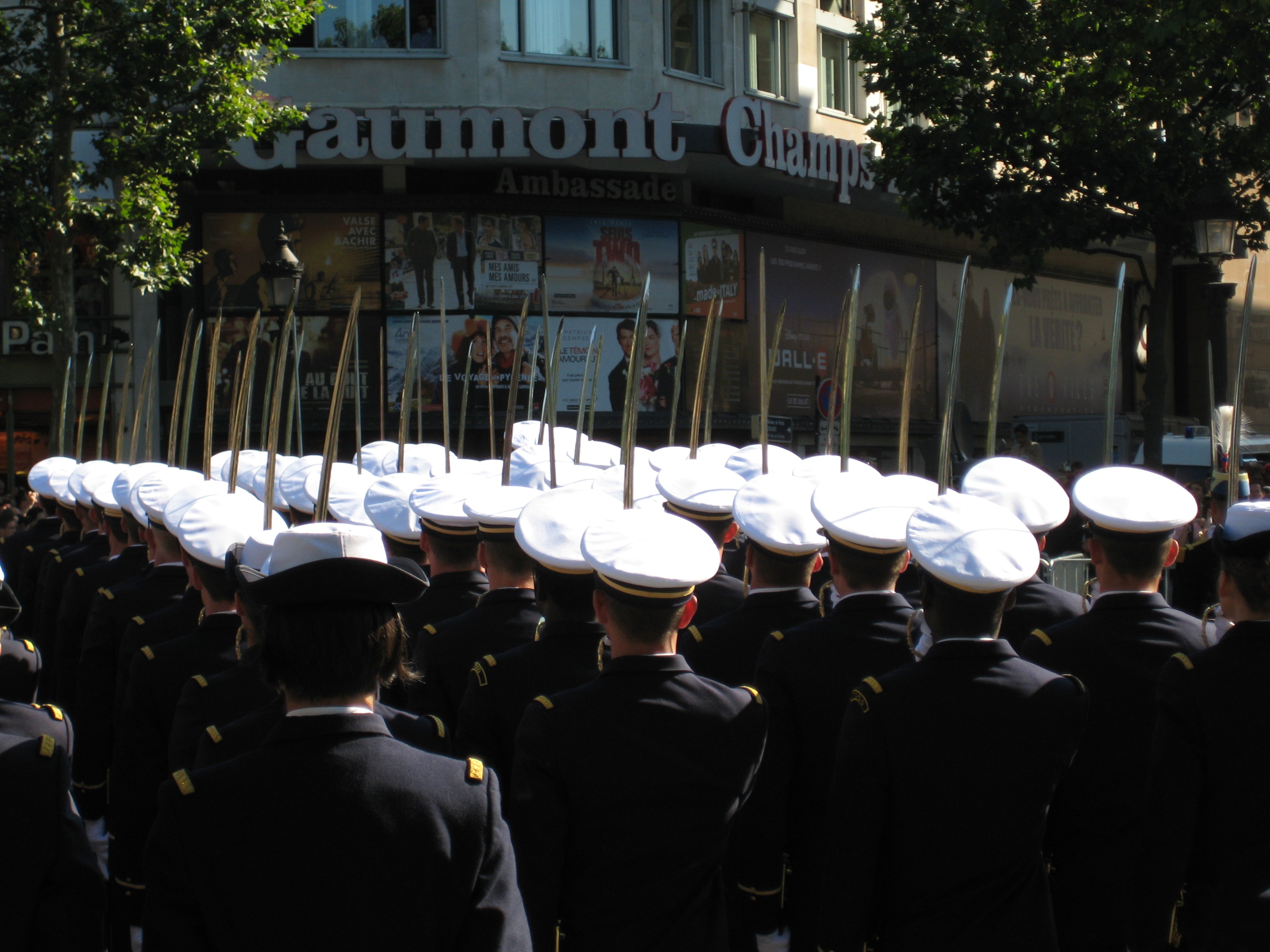
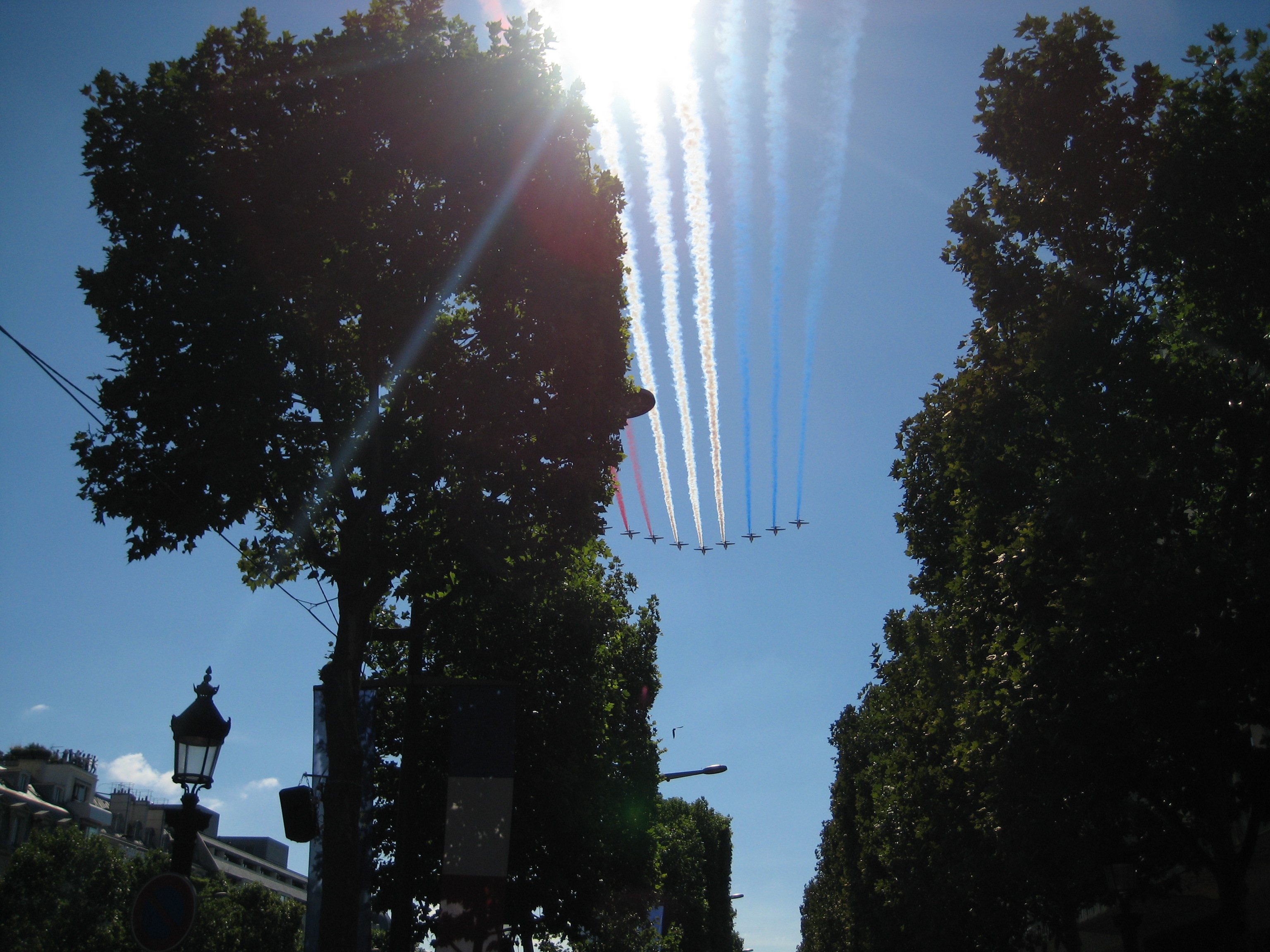
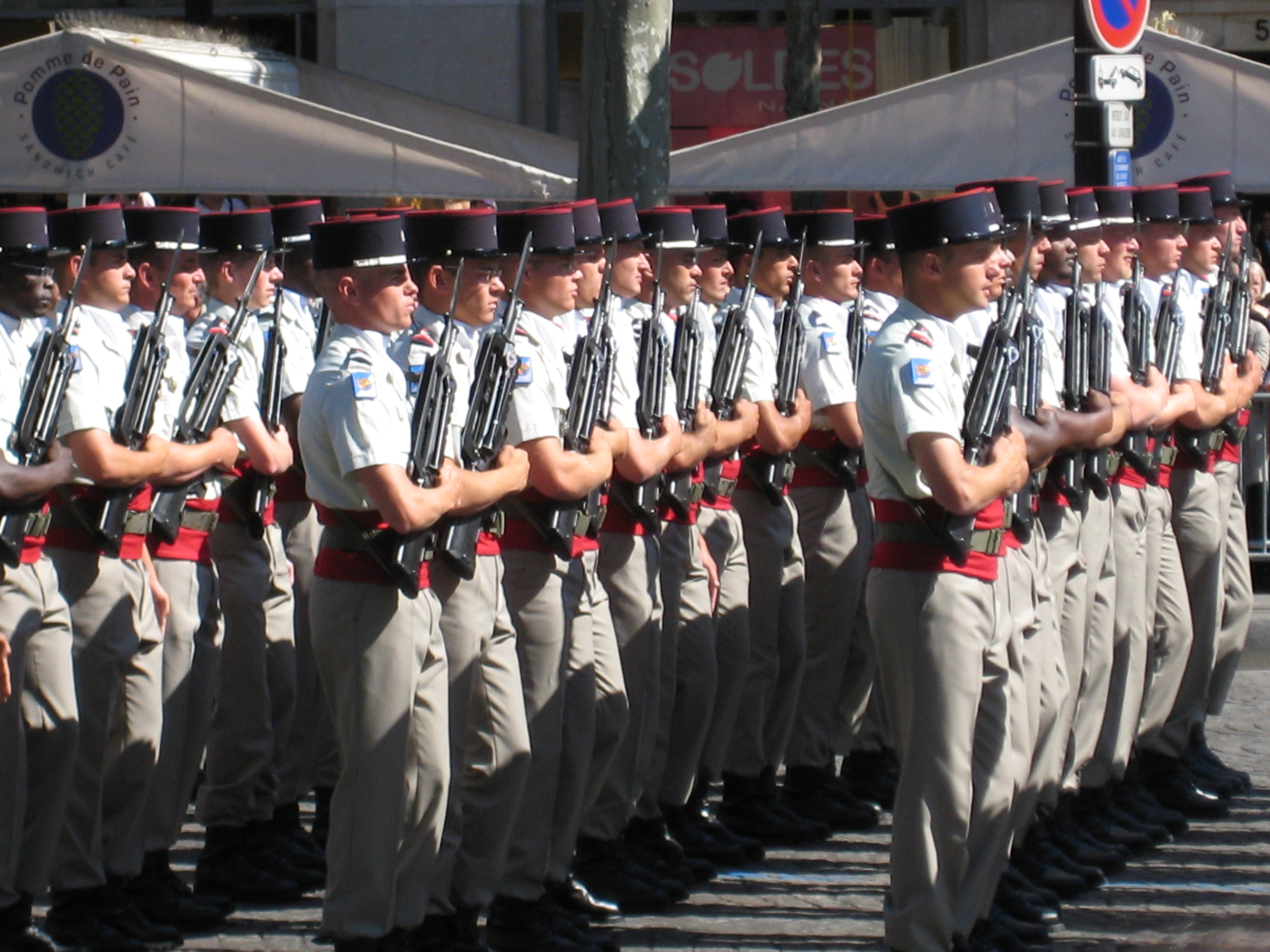
Here are some photos from the Bastille Day Military Parade a few years ago. It proceeds down the Champs Elysees and lasts for hours. The year we were there, Sarkozy was president. As he rode through, the crowd around us started whistling and my first thought was: they really like their president. Then I realized my mother-in-law was shaking her head and shocked, astonished, that people would dare whistle like that. Turns out whistling in France is quite rude; basically the equivalent of booing. So probably best not to whistle at a French girl.

If you ever go to the parade, get there early, bring lots of water, a snack, definitely a camera, and don’t bother to try and claim any territory like you would in a parade here – you’ll be scrunched and pushed out of the way.

Here’s my Bastille Day workout, designed to help you stand your ground in the crowd of parade revelers:

1. Medicine Ball Squats: Take a wide stance and squat down, maintaining even weight on each foot, while thrusting the medicine ball straight out in front of you, arms parallel to the ground. This will help you keep your position and should you need to, shove back.

2. Lateral Deltoid Raises While Balancing on One Foot: To help you ward off those pushers that come at you from the side while maintaining your balance. You can’t risk falling at the parade, they’ll never let you stand back up.

3. Lunges with Biceps Curls: It’s hot. Really freaking hot in Paris in July. If you are American, and as such a Water Bottle Addict, you’ll be lifting that water bottle to your mouth for at least three hours straight. The lunges are to help propel yourself forward with force after you’ve been shoved and maneuvered to the back of the pack.

Me, waiting for the parade to start

Me, tired from getting up early, waiting for the parade. We started out in front then got shoved to the back before the parade even began.

594 Bastille Day 597 Bastille Day

Best seats on the Champs

Best seats on the Champs. They were drinking champagne.

608 Bastille Day 610 Bastille Day 634 Bastille Day

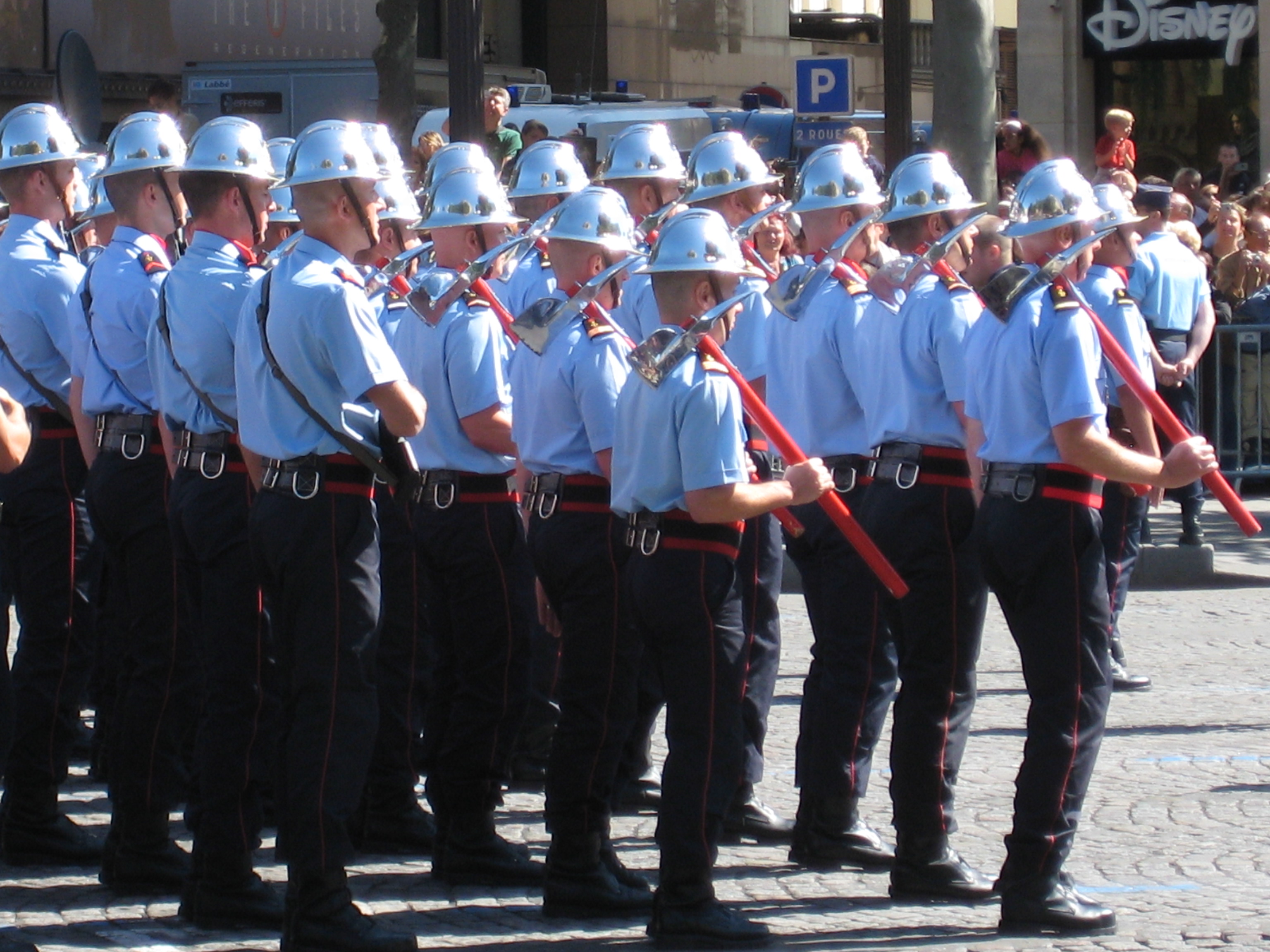
The firemen, the most popular group in the parade

The firemen, the most popular group in the parade

651 Bastille Day

642 Bastille Day 656 Bastille Day

664 Bastille Day652 Bastille Day

Liebster Award

liebster awardThere’s nothing like an award nomination to boost morale and motivation! A fellow Francophile at Oh Sacré Bleu nominated me for the Liebster Award. Thank you, and Yay!

This award is a pat on the back for newish bloggers from fellow bloggers, meant to help spread the word about our favorite blogs out there in the blogosphere.

As part of the Liebster award, I must do the following:

  • Post the award on my blog
  • Thank the blogger presenting me with the award and provide a link back to their blog
  • Write 11 random facts about myself (uh-oh)
  • Pay it forward: find 11 other blogs with less than 200 followers that I enjoy reading and nominate them. (This is a tough one! Many blogs I follow have more than 200 followers, or have already been nominated, or I don’t know how many followers they have and couldn’t figure it out, but here are a bunch of really great ones that I’m happy to share. Sadly, I had to leave many of my discoveries off the list.) Okay, so, my dad was a math teacher, leaving me with a strong left brain, and I have to wonder… if every nominee faithfully nominates 11 blogs, after about 10 rounds, we’ve well exceeded human population … but I digress. It’s great to receive and spread blog love.
  • Answer the 11 questions the award presenter asked me, and ask my nominees 11 questions

Here we go:

Random Facts About Me

1. Many of my relatives are cowboys, the real deal (read about them here). I, however, am horribly allergic to horses.

2. I wake up every morning at 5 a.m. to work out.

3. I’m left handed.

4. I’ve sprained my ankles well over 20 times between the two of them. Ridiculous.

5. My mom wouldn’t let me take French in high school, despite me really wanting to. She said, “Carol, you live in Arizona. You’ll never have any occasion to use French. You’ll take Spanish.” Then I married a Frenchman. I like to remind her of this story.

6. I  need a social media detox on a regular basis. I have a crappy little phone with no internet access and I like it that way. I often leave it behind, as well as my laptop – life feels freer and simpler when I disconnect from all devices. I’ll take a paper map over GPS any day.

7. I’ve been to 5 continents. Missing Australia and Antarctica.

8. Even though the bottle says rinse then repeat, I don’t repeat. I’m rebellious like that.

9.I recently discovered that I’m dairy intolerant. It’s really pissing me off.

10.  I’m a redhead. I’ve always been one, and I’ve always liked being one.

11.  I have a doctorate degree in physical therapy.

Eleven Questions from Oh Sacré Bleu

1. Why do you blog? Because I love to write. And I think I found a good subject to blog about.

2. Are you in any way a ‘cultural failure’? i.e. You don’t do something that is typical of your nationality or culture (e.g. an Indian who doesn’t like spicy food, an Irishman who doesn’t drink alcohol etc) I think being a Francophile makes me a cultural failure, doesn’t it? It certainly did during the “freedom fries” craziness. I also don’t like apple pie, I can’t get excited about baseball, and I can’t bring myself to eat a corn dog. I just threw up in my mouth a little thinking about corn dogs.

3. Do you believe in ghosts? If I say no, will the ghosts find out and come to get me?

4. What’s a really bad song that you secretly like? See You Again by Miley Cyrus. Yeah, that’s right. She was in Hannah Montana mode when she rocked this one.

5. One country you can’t wait to visit? Only one? Ok. New Zealand.

6. Dogs or cats? Dogs. Big dogs.

7. Favourite city in the world that you’ve visited? I have to say Paris, right? I love Paris. Not to live, but to visit.

8. Do you collect anything? Randomly and unconsciously, I do. Buttons. The extra ones that come with new clothes. I don’t just collect them, I hoard them. Weirdo.

9. Favourite destination in your own country? Yosemite National Park

Happy happy me, in Yosemite Valley

Happy happy me, in Yosemite Valley

Vernal Falls

Vernal Falls

10. Worst thing about living in my country is…. Angry, hateful, bitter political climate.

11. Best thing about living in my country is….Diversity. People, cultures, food, terrain – you can find it all, here.


My Nominations:

C’est La Vie Cuisine Yummy recipes and a slice of life from a Frenchwoman living in the U.S.

Little Miss Frenchified An American teaching English to Strasbourg high school students.

Multilingual Parenting Advice and insight from a parent who has been there and done that.

Learn French With Jennifer A French teacher married to a Frenchman gives us a word a day. Great resource for French learners.

Stumbling Into Paradise Fun stories of adventures in learning French (complete with stereotypical hardass French teacher) and traveling.

The Head of the Heard Stephen shares his adventures of living in a foreign country and raising a multilingual child.

Au Lit! An Aussie married to a Frenchie living in France

The European Mama A Polish mom married to a German living in the Netherlands and raising three kiddos

Brian Goldsmith Photography For some fantastic armchair traveling

Meg Travels Beautiful photos and anecdotes from around the world

Traveling Frenchies Family of Frenchies, traveling the world


Okay, you guys are up: Eleven Questions for My Nominees

1.     If you could live anywhere in the world, where would it be and why?

2.    What is the best book you’ve read recently?

3.    What is the nicest thing a random stranger has ever done for you?

4.    Your life will be made into a movie. Who do you want to play you?

5.    What was your favorite childhood toy?

6.    What is your guilty pleasure?

7.    Sweet or savory?

8.    If you could go anywhere in the world right now, where would you go?

9.    How many and which languages do you speak?

10. What was your favorite subject in school? Least favorite?

11.  If you could have any job other than your current one, what would you do?

Now what are you waiting for? Go check out these blogs! Go!
 

Kermesse

School’s out for summer!

kermesseSummer feels more real with kids. In San Diego, where the seasons blend and where we have two, maybe three weeks of vacation a year, summer never really meant much. Just a little warmer and crowds of tourists everywhere we want to go. But now, my daughter has finished her first year of preschool, and we kicked off summer in style: with an end of year show and Kermesse.

The preschool section of the school put on an hour-long show. Somehow, the teachers got those two, three, four, and five-year-olds to perform choreographed dances, sing, recite memorized lines, and even put on a play. Seriously – three and four year olds doing the tango, kindergartners performing Snow White, and two-year-olds dancing to a beat, each group waiting patiently while the others performed, and not one of them on stage crying for Maman? Amazing. These people are miracle workers.

Four year olds doing a choreographed dance on boogie boards to Surfin' USA

Four year olds doing a choreographed dance on boogie boards to Surfin’ USA

Two-year-old cowboys and cowgirls

Two-year-old cowboys and cowgirls


Then there was Kermesse, a carnival of sorts that in France is mainly put on my parochial schools. When my husband heard there would be a Kermesse at the French American School, he immediately decided to take a half-day off, citing fond memories of going to Kermesse with friends as a child. The school did not disappoint: lots of fantastic food, a few rides, good music, and all sorts of fun activities.

Yes, please!

Yes, please!

DSC00507

DSC00498

Homemade games with prizes

Homemade games with prizes

Dunk Tank

Dunk Tank

DSC00508

DSC00523

Happy summer, everyone!

Staycation for the Summer

Me, with a serious frou frou drink on our honeymoon

Me, with a serious frou frou drink on our honeymoon

The following is a post for this month’s Raising Multilingual Children Blogging Carnival hosted by All Done Monkey. This month’s theme is Multilingualism and Travel. Click here to read great posts from others. 

Once upon a time, it seems so long ago, summer meant packing our bags for an adventure, or two, or four. I prided myself on my ability to pack for two plus weeks in a carry-on. Over glasses of wine uninterrupted by children who needed to use the potty or who wanted to eat NOW, we vowed that we wouldn’t fall into the trap so many of our friends had, we would keep traveling, having adventures, and our kids would simply come along for the ride. I look back on those evenings and it’s like I’m watching a sit-com; I double over in laughter and point at the former me and say: “You think you are so savvy, so above it all, BWAH HA HA! Just you wait!”

Thing is, in my mind I skipped right over the toddler years and straight to kids that were able to talk, bathe themselves, and walk more than a quarter mile before needing to be carried. I didn’t think about the car seats, Pack ‘n Plays, nor the strollers that would need to come with us. Hotels equipped with cribs, restaurants with high chairs… not even on my radar. I definitely didn’t envision a full-blown tantrum in any of these scenarios.

We took our daughter to France when she was nine months old. She did great – there were almost no tears until the last leg of the flight there, at which point she’d reached her limit. She screamed – SCREAMED – for an entire hour, and nothing we did could comfort her.

Then there was the train ride from Brittany to Paris. We had our suitcases – three – plus a stroller, plus her car seat, plus a diaper bag and a backpack. The train station had one elevator. One. The elevator held about three people with one bag each. The group waiting to board the elevator was fifty deep. Each trip on the elevator took four and a half minutes. Seriously. I timed it. To make it even more complicated, the platform wasn’t announced until 10 minutes before the train was due to take off.

This was France, mind you, where a line is more of a group of people pushing and ducking and manipulating their way past all the others. There’s no polite and fair waiting your turn. It’s survival of the fittest, and they aren’t above shoving past a woman and her stroller, or even shoving that stroller. While I complained about it, Stéphane took the stroller and turned it into a battering ram. When in France…. We pushed our way to the front of the group, made it to the platforms, and sprinted – he dragging two bags and wearing the backpack, me pushing the stroller/car seat and dragging our third bag with the diaper bag slapping against me and knocking me off balance. We boarded and the train immediately began to move.

Then I realized I had a diaper to change. The train had one car – one – with a diaper changing table, but I couldn’t find it. I ended up sitting on a toilet seat, my feet braced against the wall and my legs a makeshift changing table with my daughter stretched across them, rocking precariously every time the train hit a curve.

Then

Then

So, other than a small weekend trip up the coast, we aren’t going anywhere this summer. I’m intimidated by the thought of traveling with a one-year-old and an almost three-year-old overseas. Next year, we hope to go to France and spend at least a few weeks there. It’s obviously important that our children know their French family and their French heritage. And that we eat crêpes. Lots and lots of crêpes. There are all sorts of opportunities for family language vacations throughout France, where the three of us could enroll in language courses and really immerse ourselves. Plus, with my husband’s French citizenship, there are options for sending the kids to summer school there. Soon, while they’re young, before they realize that school instead of lazy summer days equals Mean Mom.

But here’s the silver lining: We live in San Diego, a top vacation destination for so many. All it takes is a morning at the beach, my toes in the sand, watching the surfers, for me to feel like I’m on vacation.

Now

Now

My daughter’s preschool lets out this week. She’s made so much progress with her French over this past year, but soon she will be home with English-speaking me every day rather than at school with her native French-speaking teacher and French only classes. I’ve been so worried that she’ll lose all she’s gained. Then I realized –hey, my French is decent. It’s certainly better than nothing. So we’ll be tourists in our own city, but we’ll do it in French. San Diego Zoo day, where we learn the animal names in French and talk about what they are up to. We’ll learn what noises they make – in French! Sea World? Lego Land? Balboa Park? The Embarcadero? The beach? Oui oui! Ce n’est pas mal!

I mentioned my idea to another mom at the preschool, and she quickly said she wanted to join us with her kiddos. Then another mom. And another. So my little idea just became a big deal – most of these families are not French speaking, so I’ll be leading the charge with our efforts to keep the kids progressing in French.

I still vow to get back to traveling adventures. I haven’t given up the dream. It will just hopefully be without a diaper bag.

The Rose Colored Glasses Wiped Clean

 342 Stone garden

I wrote this five years ago after spending most of the summer in Antibes, France. That was the summer France lost some of its magic for me, but that isn’t a bad thing. It became a real place – one with flaws as well as astounding beauty – rather than the idealized fantasyland of my European dreams (which wasn’t such a bad thing either). France still holds magic for me, and when I gaze upon her lavender fields, explore her old castles, or walk her cobblestone streets, I live some of my happiest moments.

I’m back in San Diego after our summer stint in the south of France. I’ve spent a lot of time in France and have devoted much time and effort to mastering the unmasterable French language. This recent trip was a test for us.  Exam question: Do we want to move to France? Answer: The jury is still out.

France, for me, particularly the south, has long been an idyllic escape, a locale I long for when I’m away. After all the time I’ve spent there, I still idealize the place, even if it means subconsciously denying its imperfections.

There is such joy, and magic, in being in a foreign country – new sights, smells, sounds. But part of that comes from not knowing what exists in its dirty underbelly. In seeing only the glamorous parts meant for the tourist’s amazed eyes, and not having to deal with the day to day aspects of living there. Part of that magic also comes from not knowing what is being said around you.

One afternoon, after hitting the beach, I was absolutely overheated. On my walk home past the chic private beaches and touristy shops that spilled their postcards, film (people still buy film?), beach towels, and bikinis onto the sidewalk, I didn’t pass one of the many ice cream shops. Instead, I stopped for some of that devine delicacy, a gob of gastronomic goodness, a jolt of gelato, yes – bliss on a baked waffle cone.

As I walked away with my temporary treasure, it of course began to melt, so I stopped in front of a shop window to eat some of it and ensure that I didn’t arrive home covered in telling chocolate drips. An older man, short and stocky with a genial smile, walked by and said something to me. It took a minute to process what he had said, so enraptured was I in waffle cone wonderland. So, for a brief moment, I existed in that blissfully unaware state that always occurs when I’m traveling in a country where I don’t speak the language. I saw a sweet little old local, probably flirting with me judging by the way he was smiling, or perhaps recommending a pair of shoes from the window I was absently eyeing. He stopped to watch me, and then my brain finally processed what he’d said:

“You’ll get fat if you keep eating like that.”

Jackass. I liked you better when I had no clue what you were saying.

Snappy comebacks aren’t my forté – though they come to me later in numbers. When offended, I revert to a wordless, helpless little girl.

But perhaps my actions in that moment spoke louder than words. I shrugged and took another big lick. Did that translate, monsieur?

Villa Rothschild on  St. Jean Cap Ferrat, magic and beauty in the south of France

Villa Rothschild, St. Jean Cap Ferrat, magic and beauty in the south of France

Learning French With My Daughter

Despite research to the contrary, code-switching seems to be working for us.

While my daughter’s English is soaring, her French has been lagging. I mentioned in a previous post that I was making a commitment to speaking more French at home. My husband only has a few hours each day with our kids, and while he speaks to them in French, my daughter responds in English. He and I speak to each other mostly in English. So, I’ve started reading more French books, playing more French songs, and speaking more French to the kids and when we are all together. I’ve been practicing my pronunciation in the car with some CDs, and my daughter pipes in with me, her high-pitched toddler voice perfectly enunciating each vowel and rolling those “r”s. She is now speaking in full French sentences. She still veers toward English, but will repeat after me when I translate her words to French. My French has improved, too. Success!

Right now, French is fun for her. She likes to point out what language people are speaking, and she’s asked more than one of our friends if they speak French or English. She’s in a French preschool two days a week, so she’s hearing lots of French there, too. I worry what will happen if we no longer have the ability to send her to French immersion school. Will she hate French? Think of it as work, or something that makes her different and therefore something she rejects? I dream up all sorts of solutions: we’ll spend summers in France! I’ll create a curriculum and teach French in whatever preschool/elementary school she ends up in! We’ll find playgroups full of French speakers! I’m nothing if not determined. My favorite solution is undoubtedly summers in France. I’m thinking Provence….

Here’s an interesting new phenomenon: my daughter is well beyond babbling in English, but she’s been babbling nonsense words with French sounds. I wonder if this gibberish is because she’s trying out the French sounds she’s heard (my MD says they see this a lot in kids that are exposed to multiple languages) or if she’s trying to babble like her little brother, who’s getting a lot of attention for all the cool new sounds he’s making.

Her English is progressing well. She chatters away, using verb tenses mostly correctly and picking up vocabulary at an amazing rate. Those little preschooler minds are amazing things. She also makes mistakes but I can see the logic. My brother asked her the other day, as she ate a banana, if she was a monkey. She said, indignantly, “I amn’t!” instead of “I’m not.” The logic makes sense. After all, so many of our contractions are with the verb, not the subject.

Fascinating stuff, this language development. It makes me want to go back to school and study linguistics, as well as child development. Plus French history, French, English. Is there a job out there where I can just go to school all the time? That’s the job I want.

The Trouble With French…

 … is all those vowel sounds. Oh, and the “r”s. And the faux amis. Maybe I should just quit now.

The thought of quitting enters my head on a daily basis lately. My Phonetics and Oral Proficiency class wrapped up this week. Yesterday I listened to a recording of myself reading Enivrez-Vous by Baudelaire that I made the first week of class, and I cringed and squirmed in embarrassment. I know I’ve improved since then. The vowels that were once a mystery to me are now decipherable. The rolling “r” has improved, slightly. But rue and roue still elude me (read here about my experiences with these petit mots). Every time I say one of these words and my husband smiles and says, “You’re so cute,” I want to throw my textbook across the room and shout, “I quit!”

I have to remind myself how far I’ve come, and that progress is now measured as fine-tuning rather than huge leaps. My comprehension and pronunciation is much better than it was four months ago. Let alone when I first met my husband. We occasionally spoke French together on our first dates, and on one of these I was explaining to him that my neck, mon cou, really bothered me sometimes, but when I rested it or got a massage, it felt much better. Cou, phonetically, is [ku]. Not far from [ky], or cul, which means ass. I often confused the two. So as I spoke, he nodded and fought a smile, then laughed and told me he hoped massage and rest would help my aching ass.

More recently, when our daughter sang her French song about a hen sitting on a wall, as she got to this part: lève la queue et puis s’en va, I nearly choked on my water à la Jon Stewart style. Queue, the word for tail, is again close to cul to the untrained ear. I asked her to repeat what she’d said, and then realized that she wasn’t, after all, singing about a hen who sat on a wall and then decided to pick up her ass and leave.

I’ve spent a lot of time practicing vowel sounds. I think I’m finally distinguishing well between deux and douze (two and twelve), and I might even be able to order un croissant without waving one finger in the air (or a thumb, as one finger also confuses the French) to make it clear how many I’m asking for.

My face hurts after I speak French. There’s a lot more movement and tension in the jaw and cheeks in French than in English. You can tell a French person from a distance by the way their mouth moves when they speak and the tension in their facial muscles. English vowels are kind of lazy, really. We warp them to make it less of an effort for ourselves. Don’t believe me? Try the words “can” and “than” on their own and then in a sentence or two, and see what happens to those poor little “a”s. Our professor jokes that we must exercise our mouths to tone up our speaking muscles for French just as we would exercise our bodies for a sporting event, but it’s true. It’s a completely different way of using our face and tongue and vocal cords.

As my vocabulary improves, my confusion over faux amis lessens. When we got married eight (!) years ago, we wrote our own vows in both French and English. I, not wanting to humiliate myself in front of his family, read them to him before hand to make sure I hadn’t made any huge errors.

Thank God for that.

As I explained that I was so happy to be starting our lives together and excited for our future and that I hoped I could make him as happy as he’d made me (these sappy words were the only ones I could manage with my rudimentary French), he nodded and gave me a wolfish smirk while wiggling his eyebrows.

“I hope so, too,” he said.

“What? What did I say?”

This is how I found out that in French, the word excité is only used in a sexual sense. Turns out I was about to announce, in front of all of our friends and family, that I was horny and hoped I could satisfy him.

When I remember these things, and how far I’ve come, the thought of quitting seems preposterous. A friend recently pointed out to me that I’m an overachiever and I should cut myself some slack. The thing is, too much slack and I get antsy and bored. So I might as well keep on with this French stuff.

DSC00253

The Results Are In: My French Ain’t Half Bad!

Turns out my French is better than I give myself credit for, at least according to the Alliance Française and the test I took there!

The exam was two sections: the first on computer, which started with very basic French and quickly progressed to complicated phrases and vocabulary. In one of the sections I had to answer questions on women’s hairstyles depicted in basic drawings. I wouldn’t know what those styles were called in English, so I’m pretty sure I bombed the French part! Points were awarded for correct answers and removed for incorrect answers. Intimidating.

For the second section of the test, I spoke with two native speakers. In our first conversation, I had to pretend to be interested in buying a home in the southwest of France. Not so hard to pretend I wanted that house! In the second conversation, I had to convince one of them to give up using her cell phone for 24 hours.

Here are my results:


French Placement Test

Here’s how those levels are defined, according to the Wiki article on the CEFR (Common European Framework) for determining language levels:

B2 is Upper Intermediate:

·Can understand the main ideas of complex text on both concrete and abstract topics, including technical discussions in his/her field of specialisation.

·Can interact with a degree of fluency and spontaneity that makes regular interaction with native speakers quite possible without strain for either party.

·Can produce clear, detailed text on a wide range of subjects and explain a viewpoint on a topical issue giving the advantages and disadvantages of

various options.

C1 is Effective Operational Proficiency, or Advanced:

·Can understand a wide range of demanding, longer texts, and recognise implicit meaning.

·Can express ideas fluently and spontaneously without much obvious searching for expressions.

·Can use language flexibly and effectively for social, academic and professional purposes.

·Can produce clear, well-structured, detailed text on complex subjects, showing controlled use of organisational patterns, connectors and cohesive        devices.

 While these results mean we can move forward with my nationality application, they also mean that I need to be less self-conscious in speaking French. I’m at a level where I’ve passed those first few huge hurdles of the learning curve, but I am very aware of the many things I haven’t yet mastered, so too often I tend to not speak rather than risk making mistakes. I want to be completely bilingual. To watch a movie without any need of subtitles. To understand song lyrics without help. To not make grammatical errors. To maybe, even, someday teach French. (I need a back up plan. Being a physical therapist is hard on your body!)

These results were just the encouragement I needed, as I’ve been doubting whether French is something I can ever hope to master. This reenergized me, and made me start dreaming again of spending a summer, or two, or three, in France, going to language classes, and of one day being so fluent that maybe I even fool a French person or two.

Would You Like Pepperoni on That?

Pizza in the south of France

Pizza in the south of France

According to my husband, the true test of language proficiency is whether or not you can order a pizza over the phone.

We’ve all been there. Room full of friends, maybe studying together, watching a game, or just hanging out. People get hungry. Someone suggests ordering a pizza. One person shouts out, “Mushrooms!” and another, “Pepperoni!” while a third person says, “I’m a vegetarian. No meat!”

As anyone who has tried to learn a second language can attest, when more than one person speaks at a time, conversation becomes tangled and it can be impossible to comb it out and discern what’s being said.

Then there’s the phone call. It’s hard enough to understand your non-native tongue in person, let alone over the phone. Add to that the fact that the person working at the pizza place is often foreign as well. So, two people are trying to communicate with each other in their non-native language over the phone. For my husband here in southern California, that means a French guy talking to a native Spanish speaker in English. For me in France, I often found myself talking to north Africans whose native tongue was Arabic. Chances are you’re using a cell phone, too, which despite our advances in technology still can’t compete with a landline in terms of quality.

My husband describes it this way:

“The trouble starts when they ask for your phone number. In French, we always say: eighty-five, nineteen, etc. In the U.S., phone numbers are stated one digit at a time. So the person on the other end of the line ends up confused. I’m trying to understand what the pizza guy is saying while everyone in the room is shouting their likes, dislikes, what size pizza, etc. I have to ask the pizza guy to repeat everything three or four times and now he’s annoyed. People keep yelling out ingredients. The pizza guy asks if we want pepperoni. I heard someone say they were vegetarian. But pepperoni, that must be the same as the Italian word: peperoni, which is a type of pepper. That’s not meat, right? So I say, ‘Yes, pepperoni.’”

Miraculously, the pizza arrives. And it’s not the pizza that anyone wanted.

Vieux Antibes

Vieux Antibes

I had a similar experience in Antibes, the south of France. My friends decided that my French was the best among us, so I should order the pizza. We knew of one place that delivered.  We’d been there in person before to order and hadn’t had the most… positive experience with the guy there. So, crossing my fingers in hopes that someone other than the guy we’d dealt with would answer the call, I dialed the pizza place. Mr. Personality answered. His Arabic accent was thick and he had a short fuse. I did my best, ordered two pizzas, one “Reine” (olives, mushrooms, and prosciutto) for my friend and I to split, and a second pizza covered in meat for our other friend (she was 8 months pregnant, adorable, and ravenous).

Then we waited. And waited. He finally showed up. With one pizza. It wasn’t either of the pizzas we’d ordered. He also claimed he had no change. We argued with him. This isn’t what we ordered! Why would you come here without any change? He became irate and insistent that the mistakes were ours and not his. My pregnant friend was about to pass out from hunger, so we took the pizza and he took a hefty tip.

We never ordered pizza from his store again. Pity, they made good pizza. Thin, crispy crust, flavorful cheese, fresh toppings…. The south of France has the best pizza I’ve ever tasted, outside of Italy. Even when they get the order wrong.

Ordering food in a foreign language is an adventurous undertaking. Even something that seems as simple as pizza. The day I can confidently order a pizza over the phone in France, I’m popping open a bottle of champagne to celebrate.

Now I’m hungry.

Happy Spring! Here's me in a lavender field in the south of France.

Happy Spring! Here’s me in a lavender field in the south of France.